
The Best Cell Phone Diagnostic Software: A Guide to Phonecheck
Introduction to Cell Phone Diagnostic Software
In today’s digital age, cell phones have become an integral part of our lives. From communication to entertainment, these devices have revolutionized the way we interact with the world. However, like any other electronic device, cell phones are prone to issues and malfunctions. This is where cell phone diagnostic software comes into play. With the advancements in technology, diagnostic software has become a crucial tool for technicians and phone users alike. It allows us to efficiently and accurately identify and resolve issues within our cell phones.
In short: cell phone diagnostic software tests a phone’s hardware and software automatically and produces a certified report — this guide, made for repair shop owners and refurbishers, compares Phonecheck with Blancco, NSYS, PiceaOne and TestM so you can pick the right tool for your volume.
Benefits of Using Phone Diagnostic Software
The benefits of using phone diagnostic software are numerous. Firstly, it saves time and effort by automating the diagnostic process. Instead of manually troubleshooting and testing each component of a cell phone, diagnostic software can quickly identify the root cause of the problem. This not only speeds up the repair process but also minimizes the chances of human error.
Secondly, using diagnostic software ensures accuracy in identifying issues. These tools are designed to perform comprehensive tests on various aspects of a cell phone, including hardware and software. By analyzing the results, technicians can pinpoint the exact problem and provide an appropriate solution. This eliminates the guesswork and reduces the risk of misdiagnosis.
Understanding the Importance of Accuracy and Efficiency in Phone Diagnostics
Accuracy and efficiency are paramount in phone diagnostics. Inaccurate diagnosis can lead to unnecessary repairs or replacements, resulting in additional costs for both the technician and the phone user. Moreover, it can prolong the downtime of the device, causing inconvenience and frustration. On the other hand, efficient diagnostics enable technicians to quickly identify and resolve issues, ensuring minimal disruption to the user’s daily life.
Phonecheck: A Cell Phone Diagnostic Software Overview
Phonecheck is a cell phone diagnostic software used by technicians and phone resellers to test iPhones and Android devices. It offers a set of tools for diagnosing common hardware and software issues on a phone and supports a wide range of device models, which is why it comes up often in searches for cell phone diagnostic software.
Key Features of Phonecheck for Accurate and Efficient Diagnostics
Phonecheck includes a set of features aimed at accuracy and efficiency in diagnostics. Firstly, it performs thorough hardware and software tests, examining components such as the battery, camera, microphone, and storage. This ensures that no issue goes undetected, allowing for a comprehensive diagnosis.
Secondly, Phonecheck provides detailed diagnostic reports that are easy to understand. These reports highlight the identified issues, along with recommended solutions. Technicians can use this information to communicate effectively with phone users and provide them with a clear understanding of the problem.
Additionally, Phonecheck offers a user-friendly interface, making it accessible to both experienced technicians and novices. Its intuitive design guides users through the diagnostic process, ensuring that no step is missed. This saves time and minimizes the learning curve for those new to phone diagnostics.
How to Use Phonecheck for Diagnosing iPhones in Bulk
If you are a technician dealing with a large number of iPhones, Phonecheck can significantly streamline your diagnostic process. By utilizing Phonecheck’s batch testing feature, you can diagnose multiple iPhones simultaneously. This saves time and allows you to identify issues across a range of devices efficiently.
To use Phonecheck for diagnosing iPhones in bulk, simply connect the iPhones to your computer and launch the software. Select the batch testing option and follow the on-screen instructions. Phonecheck will automatically run diagnostics on all connected iPhones, generating individual reports for each device. This feature is particularly useful for businesses or repair shops that handle a high volume of iPhones on a daily basis.
Tips for Buying Used Phones and Using Phonecheck for Diagnostics
Buying a used phone can be a cost-effective option, but it comes with its own set of risks. To ensure that you are making a wise purchase, it is essential to perform a thorough diagnostic test before finalizing the deal. software like Phonecheck can help with this process.
Before using Phonecheck for diagnostics, make sure to check the IMEI (International Mobile Equipment Identity) of the used phone. The IMEI is a unique identifier assigned to each mobile device, and it can provide valuable information about the phone’s history. By verifying the IMEI, you can ensure that the phone is not reported stolen or blacklisted.
Once you have verified the IMEI, connect the used phone to your computer and launch Phonecheck. Follow the instructions to run a comprehensive diagnostic test. Pay close attention to the battery, screen, camera, and connectivity features. Phonecheck will generate a detailed report, allowing you to make an informed decision about the purchase.
Ensuring Accuracy in Diagnostics: Checking IMEI Before Buying a Used iPhone
When purchasing a used iPhone, it is crucial to check the IMEI before making the final decision. The IMEI serves as a unique identifier for the device and can provide valuable information about its history. By checking the IMEI, you can ensure the authenticity and reliability of the used iPhone.
To check the IMEI of a used iPhone, follow these steps:
- Dial *#06# on the iPhone’s keypad. This will display the IMEI on the screen.
- Note down the IMEI and visit a reputable IMEI checking website. Enter the IMEI in the provided field and initiate the search.
- The website will provide detailed information about the iPhone, including its model, activation status, and any reported issues.
By conducting an IMEI check, you can make an informed decision about purchasing a used iPhone and avoid potential scams or issues.
Advanced Features of Phonecheck Pro
Phonecheck Pro offers advanced features that further enhance the diagnostic capabilities of the software. These features cater to the needs of professional technicians and provide additional tools for in-depth analysis and repair.
One of the notable features of Phonecheck Pro is the ability to extract and analyze diagnostic data from iPhones. This data includes information about the phone’s performance, battery health, and usage patterns. By analyzing this data, technicians can gain insights into the phone’s behavior and identify any underlying issues that may not be apparent through regular diagnostics.
Another feature of Phonecheck Pro is the IMEI cleaner software. This tool allows technicians to clean and repair the IMEI of a phone. It can fix issues related to blacklisted or blocked IMEI numbers, ensuring that the phone is fully functional and can be used without any restrictions.
Using Diagnostic Data to Optimize Phone Performance
The diagnostic data collected by Phonecheck can be a valuable resource for optimizing phone performance. By analyzing the data, technicians can identify patterns or recurring issues that may affect the overall performance of the device. They can then take appropriate measures to address these issues and improve the phone’s performance.
For example, if the diagnostic data reveals that a particular app is consuming excessive battery power, technicians can advise phone users to limit the usage of that app or update it to a newer version. Similarly, if the data indicates frequent connectivity issues, technicians can recommend specific troubleshooting steps or suggest updating the phone’s firmware.
By leveraging the diagnostic data provided by Phonecheck, phone users can ensure that their devices are operating at their optimal performance levels.
What Should You Look for in a Diagnostics Tool?
Before you compare products, agree on your own requirements. The right tool for a single-counter shop in Chennai is not the same as the right tool for a five-bay operation in Dubai. Weigh each option against these eight criteria:
- Test coverage — Does it test touch, display, battery, cameras, microphone, speaker, sensors (accelerometer, gyroscope, proximity), Wi-Fi, Bluetooth, NFC, and cellular? Does it include IMEI and blacklist verification?
- Automation — Can it run a full test sequence with one tap, or does it require manual interaction at every step?
- Multi-device support — Does it handle both Android and iOS, and does it cover older models still common in your market?
- Reporting — Does it produce a PDF or shareable report the customer can see and you can attach to the job card?
- Shop software integration — Can it push results into your repair management system, or does the technician retype everything?
- Language support — Are the interface and report available in the languages your staff and customers use?
- Offline mode — Can it function without an internet connection? Critical in markets with unreliable connectivity.
- Pricing model — Per-device, per-seat, or enterprise contract? Make sure the unit economics work at your actual volume.
Other Diagnostics Tools Worth Comparing
Phonecheck (covered in depth above) is the all-round pick for high-volume Android and iOS work, but it is not the only option. Depending on whether you lean toward refurbishment, data erasure, operator partnerships, or a lightweight single-tech setup, one of these may fit your shop better.
Blancco Mobile Diagnostics & Erasure — Best for Shops That Also Handle Data Erasure
Blancco combines hardware diagnostics with certified data erasure in one platform. It is primarily used by enterprise device lifecycle managers and trade-in operations, but repair shops that handle corporate buybacks or bulk device processing will find it relevant.
Blancco runs automated diagnostics across a wide range of Android devices and generates audit-ready reports compliant with data protection standards. The erasure certificates are recognised by enterprise customers and government procurement departments in several markets, which matters if you service businesses rather than just walk-ins.
- Automated full-device diagnostics with pass/fail reporting
- Certified data erasure to international standards (NIST, DoD, and others — check current vendor docs for the full list)
- Detailed PDF reports for audit purposes
- Android focus; iOS support — check current vendor docs for scope
- Integration options for larger operations; check vendor docs for API/webhook availability
Pros: The combined diagnostics-plus-erasure workflow reduces steps when processing trade-ins; you run one tool instead of two. Audit-grade reports give you defensible documentation when servicing enterprise clients who require it.
Cons: Pricing and onboarding are aimed at mid-to-large operations; a small independent shop may find the cost-benefit ratio unfavourable. Less relevant if you handle only repair and no buyback or corporate device processing.
Pricing: Pricing on request — verify on vendor site.
Best for: Repair shops with a B2B or corporate trade-in component, or those processing refurbishment at scale where erasure certification is a client requirement.
NSYS Diagnostics — Best for Shops Building a Refurbishment Pipeline
NSYS Diagnostics is part of the broader NSYS Group platform, which covers diagnostics, grading, and trade-in management for device resellers and refurbishers. The diagnostics module is available standalone, but it is designed to feed into a wider workflow.
The tool runs automated hardware tests on Android and iOS, produces graded reports, and is built around processing large numbers of devices quickly and consistently. It is popular among refurbishment operations in Europe and the Middle East and is expanding across South and Southeast Asia.
- Automated hardware diagnostics for Android and iOS
- Cosmetic grading guidance alongside functional test results
- Batch processing designed for high-throughput environments
- Integration with NSYS trade-in and inventory management modules
- Reporting with device-grade output suitable for resale pricing
Pros: If you want to move beyond pure repair into a refurbishment and resale model, the NSYS ecosystem means your diagnostics tool already speaks the same language as your grading and pricing tools. The grading output standardises condition descriptions across staff, which reduces customer disputes.
Cons: The full value only materialises if you are also using other NSYS modules; as a standalone diagnostics tool it can feel over-specified for a simple repair shop, and pricing is tied to the broader platform.
Pricing: Pricing on request — verify on vendor site.
Best for: Shops actively moving into device refurbishment, grading, and resale — particularly those wanting a single platform from intake through to sale.
PiceaOne (Piceasoft) — Best for Operator-Grade Coverage and Telecom Integration
Piceasoft has deep roots in the telecom retail channel — its tools are used by operator-authorised service partners in several markets. For repair shops that work as authorised service centres or handle trade-ins on behalf of carriers, that integration matters.
- Broad device-catalogue coverage for Android and iOS diagnostics
- Modular platform: diagnostics, trade-in, buyback, and recycling modules available
- Integration with retailer and operator back-end systems
- Configurable test flows to match your intake process
- Reporting output with branded options — check current vendor docs for customisation scope
Pros: Established presence with telecom operators, which can matter for shops pursuing authorised service centre status or carrier trade-in partnerships. Modular design lets you start with diagnostics and add trade-in or buyback workflows later.
Cons: The platform is built for structured retail and telecom environments; an independent shop without operator affiliations may not unlock its full value, and onboarding requires more initial investment than a simple app.
Pricing: Pricing on request — verify on vendor site.
Best for: Authorised service centres, carrier-affiliated repair shops, or multi-location operations wanting a platform that scales into operator-grade trade-in workflows.
TestM Pro — Best Lightweight App for Independent Single-Tech Shops
TestM Pro is an on-device diagnostics app that runs directly on the device being tested — no PC, no cable, no external hardware. It covers a broad set of hardware tests including screen, camera, audio, battery, connectivity, and sensors. The consumer version is free; TestM Pro is the paid tier aimed at repair professionals.
It is the most accessible entry point on this list. Setup is minimal, and a technician can be running a full diagnostic within minutes of installing the app. Reports can be shared with customers as a PDF or link.
- On-device testing: no tethering or separate hardware required
- Full hardware test suite including touch, display, battery, cameras, sensors, and wireless
- Customer-facing PDF report
- Quick setup with no enterprise onboarding
- Android and iOS support
Pros: The lowest barrier to entry on this list — ideal for a shop that has not used dedicated diagnostics software before. On-device testing means it works anywhere, including during home visits or off-site assessments.
Cons: Reporting and integration options are lighter than enterprise-tier tools; if your shop management system needs to ingest diagnostics data automatically, TestM Pro may require manual bridging. Not designed for high-throughput batch processing.
Pricing: Free tier available; Pro subscription aimed at individual technicians — verify current rates on the vendor site.
Best for: Independent single-technician shops handling up to 30–50 devices a week that need a reliable, easy-to-deploy solution without enterprise overhead.
Tools We Considered but Left Off the Shortlist
CheckMEND is a strong IMEI and device-history checking service — excellent for blacklist and stolen-device verification — but it is not a full hardware diagnostics platform. It earns an honourable mention for buyback protection but does not replace a diagnostics suite.
DeviceTests is a tidy consumer-oriented testing app with a clean interface. It handles common hardware checks well but lacks the reporting depth, workflow integration, and market presence needed to displace the tools above in a professional repair context.
How Do You Choose? A Quick Comparison
- Single-tech independent shop — start with TestM Pro. The low cost and zero-infrastructure requirement let you build the diagnostics habit before investing in a larger platform.
- 3–10 technician multi-bay shop — Phonecheck is the strongest fit. It handles both repair-intake diagnostics and buyback verification, and the certified report adds customer-visible credibility.
- Multi-branch chain — PiceaOne or NSYS Diagnostics gives you the centralised oversight, standardised grading, and integration pathways a growing operation needs to keep quality consistent across locations.
Frequently Asked Questions
Do I need diagnostics software if I am an experienced technician?
Experience helps you recognise patterns quickly, but it cannot produce a documented record. Diagnostics software gives you a timestamped, reproducible report that protects you if a customer disputes a pre-existing fault. It also catches intermittent issues — a sensor that fails only under specific conditions — that even a skilled eye can miss on a visual inspection.
Can I use free phone diagnostics apps for a repair business?
Free apps are a reasonable starting point for low-volume shops or technicians evaluating whether diagnostics software adds value. Most free tiers, however, limit report output, lack IMEI and blacklist checks, and do not integrate with shop management systems. As your volume grows, the time spent manually handling what a paid tool automates costs more than the subscription.
Does diagnostics software work with both Android and iPhone?
Most tools here support both, but coverage depth varies. Android diagnostics are generally broader because the platform is more open to third-party test access. iOS diagnostics via on-device apps are limited by Apple’s sandbox; some tests — particularly raw battery-cell health — may require Apple’s proprietary tools or authorised service access. Verify current iOS coverage with the vendor before buying.
How is repair diagnostics different from data-erasure software?
Diagnostics software tests whether hardware components are functioning. Data-erasure software removes personal data to a certified standard so a device can be safely resold or recycled. They solve different problems. Blancco is the only tool on this list that combines both. If you handle buyback or refurbishment you likely need both, but they are usually separate tools.
Can diagnostics results attach to a repair ticket?
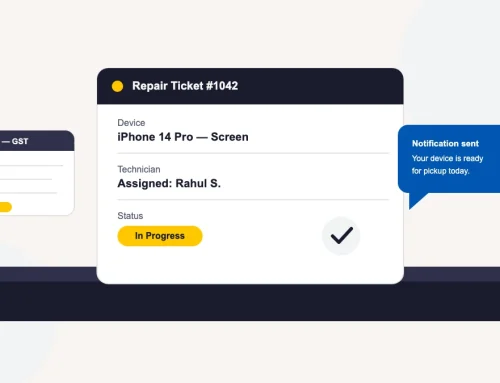
Yes — and that is where a diagnostics report earns its value. In BytePhase, the test findings attach to the job card at intake, carry through to the repair quote and customer invoice, and the post-repair result sits in the warranty record. Any technician can later pull up exactly what was found, what was done, and what was tested before handover.
Running a Repair Shop? Where Diagnostics Fit Into Your Ticket Workflow
If you run a phone repair shop, a diagnostic tool like Phonecheck usually comes in at intake, before a technician opens the device. A quick diagnostic pass records the phone’s condition, flags any pre-existing damage, and checks the IMEI so you know the device’s history before you accept it for repair or resale. From there, the useful step is getting that information onto the record you’ll actually use for the job – the repair ticket.
This is where cell phone repair software comes in: it lets front-desk staff open a ticket in under a minute, attach the device’s IMEI, warranty status, and diagnostic notes to its history, and keep intake condition, parts used, and repair status in one place technicians and customers can both check. Diagnostic software tells you what’s wrong with the phone; the ticket is where that information stays attached to the job from intake to handover.
Conclusion: Maximizing Efficiency and Accuracy with the Best Cell Phone Diagnostic Software
In conclusion, cell phone diagnostic software plays a crucial role in maximizing efficiency and accuracy in phone diagnostics. Phonecheck is one of the diagnostic software options technicians and phone resellers use, offering a range of features aimed at accuracy and speed.
Compatibility with both iPhones and Android phones makes tools like Phonecheck a versatile choice for a repair shop or individual user. Whether you are buying a used phone, diagnosing multiple devices in bulk, or optimizing phone performance, running a diagnostic test first takes the guesswork out of the decision.
Make the most of the diagnostic data you collect – recorded correctly, it tells you exactly what to check, quote, or disclose before a repair or resale goes ahead.
If you’re running a repair shop and want that diagnostic data, IMEI, and device history sitting on the same ticket your technicians work from, BytePhase offers a 15-day free trial, so you can try it against your own shop’s workflow.