
10 Signs of Mobile Phone Repair Scams (And How to Avoid Them)

Introduction: Why Mobile Phone Repair Scams Happen
Getting your phone fixed should be simple: drop it off, get a fair quote, and pick it up working. But mobile phone repair scams are common enough that most smartphone owners run into a shady shop at some point — an inflated bill, a cheaper part swapped in for the one you paid for, or a phone that comes back with a new problem it didn’t have before. The good news is that these scams follow a handful of predictable patterns, and a few minutes of homework before you hand over your device can save you real money and a lot of frustration. This guide walks through the warning signs and ten practical tips to help you choose a repair shop you can trust — whether it’s a cracked screen, a battery swap, or a full board repair.
Common Signs of Mobile Phone Repair Scams
Before the ten tips, it helps to know what a scam actually looks like in the moment — most of them show up as one of the patterns below.
- Vague or Verbal-Only Pricing
No written estimate, just a spoken number that’s easy to change later — “we’ll know the real cost once we open it up.” - Pressure to Decide Immediately
Rushing you into authorizing work before you’ve had a chance to compare prices or think it over. - No Record of Your Device’s Condition
No photos or notes taken before the repair starts, so any new scratch, dent, or crack is impossible to prove one way or the other. - Evasive About Parts
Won’t say whether they’re using a genuine, OEM-grade, or generic third-party part — or insists you won’t be able to tell the difference. - No Warranty, or None They’ll Put in Writing
A verbal “don’t worry, we’ll take care of you” is not a warranty. - Cash-Only, No Receipt
Makes it much harder to dispute a bad repair after the fact.
10 Tips to Avoid Mobile Phone Repair Scams
Once you know what to look for, avoiding a bad repair experience mostly comes down to a little verification upfront. Use these ten tips before and during your next repair.
Get a Written Estimate Before Any Work Begins
A reputable shop will give you an itemized estimate — parts, labor, and any diagnostic fee — before they open your device. If a shop refuses to put a number in writing, or only gives you a vague range, treat that as a red flag. Keep a copy of the estimate so you have something to compare against the final bill.
Ask What Parts They’ll Use
OEM, OEM-grade, and generic aftermarket parts all have different price points and lifespans. Ask directly which category your replacement part falls into and get the answer written on your invoice. A shop that dodges the question, or claims you won’t notice the difference, is the shop most likely to install a cheaper part than the one you paid for.
Check for a Documented Intake Process
Before your phone goes into the back room, a trustworthy shop will note, or better, photograph its existing condition — cracks, dents, a worn charging port — so there’s no dispute later about what was damaged before versus after. If a shop skips this step entirely, there’s no record to fall back on if something changes while it’s in their care.
Get Warranty Terms in Writing
Ask exactly what’s covered, for how long, and what voids it. A shop that offers “a warranty” but can’t tell you the duration or terms on request is unlikely to honor it if the part fails three weeks later.
Watch for Pressure Tactics and Urgency
Scam-adjacent shops often manufacture urgency — “we need to start right now or the battery could swell,” “this price is only good if you decide today.” A legitimate repair rarely needs a same-minute decision. If you feel rushed, it’s fine to ask for ten minutes, or to walk out and compare quotes elsewhere.
Compare the Final Bill to the Original Estimate
Before you pay, check that the final invoice matches what you were quoted. If it’s higher, ask for a specific reason — a part that turned out more damaged than expected is a legitimate reason; a vague “there were extra charges” is not.
Ask About Your Data Privacy
A repair shouldn’t require your PIN or password unless the specific fix genuinely needs device access (screen digitizer calibration, for example). Ask what data the technician will be able to see, whether anything gets reset without asking first, and how they handle customer data. Back up anything sensitive before handing your phone over, regardless of the answer.
Choose a Shop That Verifies Pickup
A shop that hands a repaired phone to whoever asks for it, with no ID check or verification, is also a shop that won’t notice if the wrong device leaves with the wrong person. Shops that use OTP-verified handover — texting a one-time code to the owner’s phone before releasing the device — are demonstrating a level of process discipline that tends to carry over into how carefully they handle the actual repair.
Read Reviews and Ask Around
A few minutes on Google reviews, local community groups, or asking a friend who’s used the shop before will surface patterns a single visit won’t — repeated complaints about hidden fees, parts failing early, or phones coming back with new problems. One bad review is normal; a pattern of the same complaint is not.
Know Your Rights as a Customer
Familiarize yourself with your region’s consumer protection and warranty rules before a dispute happens, not during one. If a shop won’t provide an itemized invoice, refuses a written warranty, or won’t return your original parts on request, you’re within your rights to ask why — and to take your business elsewhere if the answer isn’t satisfying.
Running a Repair Shop? Here’s How to Prove You’re Not the Scam
Every tip above cuts both ways. If you run a mobile or cell phone repair shop, the fastest way to earn a new customer’s trust — and turn a one-time visitor into a repeat customer — is to make the practices above visible, not just true. A written estimate the customer can see before you touch their device, photos of its condition at intake, and a final invoice that matches the quote all signal the exact thing a wary customer is checking for: nothing to hide.
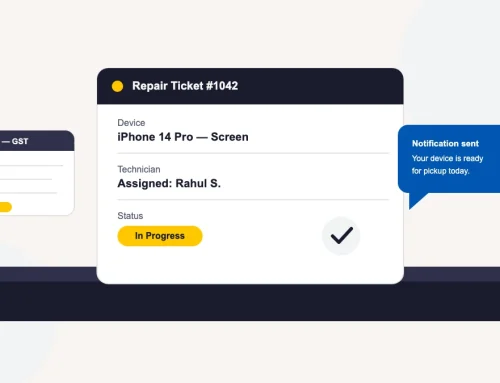
This is easier to do consistently with the right systems in place. cell phone repair software that logs a photo-documented intake, a written estimate, and the parts used against every repair removes the guesswork for your staff and hands the customer a paper trail without extra effort on your end. Pair it with OTP-verified handover so a device only releases to the person who dropped it off, and you’ve addressed the two things wary customers are told to check for most: documentation, and verification at pickup.
Conclusion: Trust Is Built Before the Repair, Not After
Most repair shops are honest, and most repairs go fine. But a little preparation — a written estimate, a documented intake, a clear warranty, and a shop that verifies who’s picking up the device — takes the guesswork out of an already stressful moment when your phone breaks. If you’re a shop owner reading this, adopting these same practices is the easiest way to stand out from the shops that don’t. BytePhase’s repair software is built around exactly this kind of transparency, and shops can try it free for 15 days to see how it fits their workflow. Keep these ten tips in mind on your next repair, and you’ll spend a lot less time worrying about who’s on the other side of the counter.