
Repair Shop Notification Channels: SMS vs Email vs WhatsApp vs Push
Repair Shop Notification Channels: The Right Message for the Right Moment
Repair shop notification channels — SMS, email, WhatsApp, and push — decide whether a customer notices their repair update at all, by Bytephase
Every repair shop management software now offers some mix of SMS, email, WhatsApp, and push notifications, but few repair shops think about which channel suits which moment in the repair journey. A quotation needs detail; an OTP-verified pickup needs speed; a quick status check suits WhatsApp more than a phone call. Picking the right notification channel for each moment — not just switching every channel on — is what keeps customers informed, builds trust, and cuts down on abandoned repairs.
- SMS: SMS is the fastest, most reliable channel — it lands even on a basic phone with no app or internet. Use it for anything time-sensitive: an OTP-verified pickup or delivery, a “device is ready” alert, or a payment reminder. Because SMS is read almost instantly, it is the default channel for moments where speed matters more than detail.
- Email: Email carries more detail than a message thread comfortably can, so it suits documents: a full quotation with line items, an invoice, or a payment receipt the customer may need again later. It is also the channel customers expect for a written record, which matters for warranty and AMC paperwork.
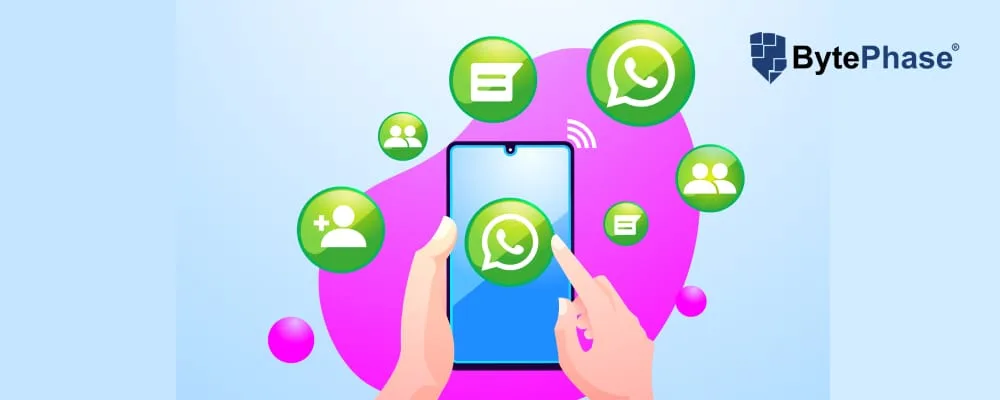
- WhatsApp:
- WhatsApp fits the back-and-forth moments — a technician’s comment on a repair ticket, a quick photo of a damaged part, or a quotation the customer wants to approve or reject with a single reply. It reads as a conversation rather than a notice, which is why it works well for anything that might need a response.
- Because updates go out automatically as part of the repair workflow, customers never need to install anything extra to start receiving them.
- Push Notifications: Push notifications reach customers who use the shop’s own app, landing directly on their lock screen without a message thread to open. They suit real-time status changes — job started, ready for pickup — for the segment of customers who already prefer checking an app over reading a text.
Matching Each Channel to the Repair Journey
There is no single best channel — the right repair shop notification channel depends on the moment in the repair journey, not just the size of your customer base. A practical way to decide:
- Job card / repair ticket created: SMS or WhatsApp — a short acknowledgment that the device has been logged.
- Quotation sent for approval: WhatsApp or email — the customer needs enough detail to decide, and an easy way to reply.
- Technician comment or status change: WhatsApp or push — low-friction, no reply expected.
- OTP-verified pickup or delivery: SMS — it has to land instantly, even without an internet connection.
- Invoice and payment receipt: email — a record the customer can search for later, with a WhatsApp copy for convenience.
- App users tracking status themselves: push notifications — no message thread to check, just a lock-screen update.
Most repair shops end up running two or three of these channels side by side rather than picking just one — the goal is matching the channel to the moment, not standardising on a single method.
Notification Triggers Built Into Bytephase Repair Ticket Management
Bytephase sends notifications automatically at each step of a repair, over SMS, email, WhatsApp, or push, so you do not have to remember to update anyone manually. Automated triggers include:
- Quotation creation: the customer is notified as soon as a quotation is generated for their repair.
- Quotation approval/rejection: the customer is notified when they approve or reject a quotation.
- Comment added: the customer is notified when a technician adds a comment to their repair ticket.
- New job creation: the customer is notified when a new job is created for their repair.
- Invoice: the customer is notified when an invoice is generated for their repair.
- Jobsheet: the customer is notified when a jobsheet is created for their repair.
- Delivery receipt: the customer is notified when a delivery receipt (OTP-verified) is generated for their repair.
- Payment receipt: the customer is notified when a payment receipt is generated for their repair.
Best Practices for Choosing a Notification Channel
A few practices make SMS, email, WhatsApp, and push notifications work better together rather than competing for attention:
- Match urgency to channel: reserve SMS for anything time-critical (OTP, pickup-ready) and use email or WhatsApp for anything that can wait a few hours.
- Keep messages short and specific: name the device, the status, and the next action — customers skim, they do not read.
- Don’t duplicate every update on every channel: sending the same status on SMS, WhatsApp, and email at once reads as spam rather than service.
- Let the moment pick the channel: approvals and documents suit email or WhatsApp; instant, must-see alerts suit SMS or push.
- Review which channels actually get replies: a channel customers ignore is worth turning off, even if it is free to send.
Conclusion
Keeping customers informed is less about turning on every channel and more about matching the right notification channel to the right moment — SMS for anything urgent, email for anything detailed, WhatsApp for anything conversational, and push for your app users. Get that match right with Bytephase, and customer updates stop feeling like extra work and start building the trust that keeps repairs from being abandoned.
See it on your own repair tickets with a 15-day free trial — no credit card required.
Watch our Video here