
Computer, Laptop & PC Repair Shop Software
At a glance: BytePhase is a repair management system for computer and laptop shops — whether you run a single bench or a busy store, every job goes from intake to invoice on one dashboard. 15-day free trial.
BytePhase’s PC and computer repair shop software gives you one dashboard to track every laptop, desktop and monitor from intake to pickup — and works just as well whether you run a single repair bench or a busy computer repair store, replacing scattered spreadsheets and WhatsApp screenshots of serial numbers. Log a MacBook screen replacement or a Dell motherboard repair in under a minute, capture device photos before a screwdriver comes out, and let customers watch status update automatically. BytePhase gives you a full 15-day free trial with every feature unlocked — no commitment. BytePhase computer repair shop software tracks every laptop, desktop and PC from intake to pickup.
Book a free demo · 15-day full-access trial
Get the app: Google Play · App Store · See the mobile app →
2,000+
Repair Businesses
32+
Countries
60 sec
To Log a Repair Ticket
Android + iOS
Native apps on every plan
Laptop Repair Shop Software
BytePhase is laptop repair shop software built for the machines that fill your bench — MacBook, ThinkPad, Dell XPS, HP Pavilion and gaming rigs from Asus ROG to MSI. Every job opens a ticket that captures the exact fault, the parts it needs and the technician on it, whether it’s a cracked screen, a seized hinge, a dead keyboard or a board-level no-boot. Because a laptop repair shop lives on parts and proof, BytePhase logs intake photos of every dent and screen line, ties each RAM stick, SSD and battery to the model it fits, and keeps full service history against the serial number — so a returning customer’s third repair opens with everything you did the first two.
- Screen & LCD/LED panel replacements — Retina to budget TN panels
- Hinge, bezel and chassis repairs logged with intake photos
- Keyboard, trackpad and palmrest swaps by brand and model
- Board-level repair: shorts, power-IC, charging-port and no-boot faults
- RAM and SSD/HDD upgrades with parts auto-deducted from stock
- Liquid-damage assessment and thermal/fan-cleaning jobs
Repair ticket management built for laptop repair shop workflows
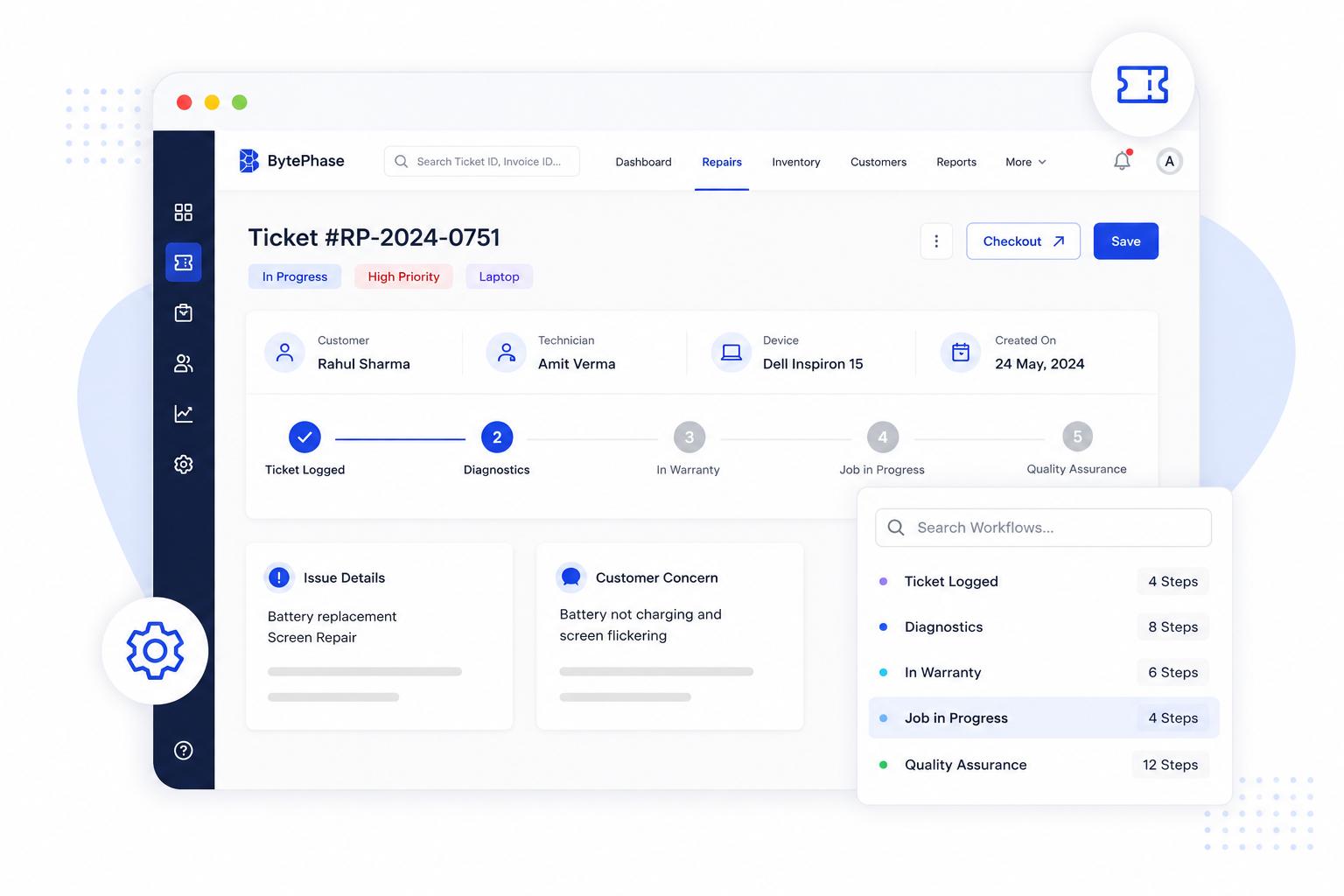
A computer repair shop doesn’t run on one ticket type. You’re juggling a Lenovo ThinkPad with a charging port repair, a custom-build desktop with a dead power supply, and a Dell monitor with backlight failure — each with different parts, technicians and SLAs. BytePhase’s repair ticket management software gives every job its own timeline, technician assignment and parts list, so nothing sits on a bench forgotten.
Pre- and post-repair checklists mean a hinge-broken MacBook gets logged before it’s opened and stress-tested before it’s returned, protecting you from “you broke something else” disputes. Specifics tracked out of the box:
- Screen and LCD/LED panel replacements
- Motherboard-level component repair
- RAM and SSD/HDD upgrades
- Liquid damage assessment logs
- Thermal paste & fan cleaning for overheating laptops
Inventory for RAM, SSDs, batteries and every laptop part
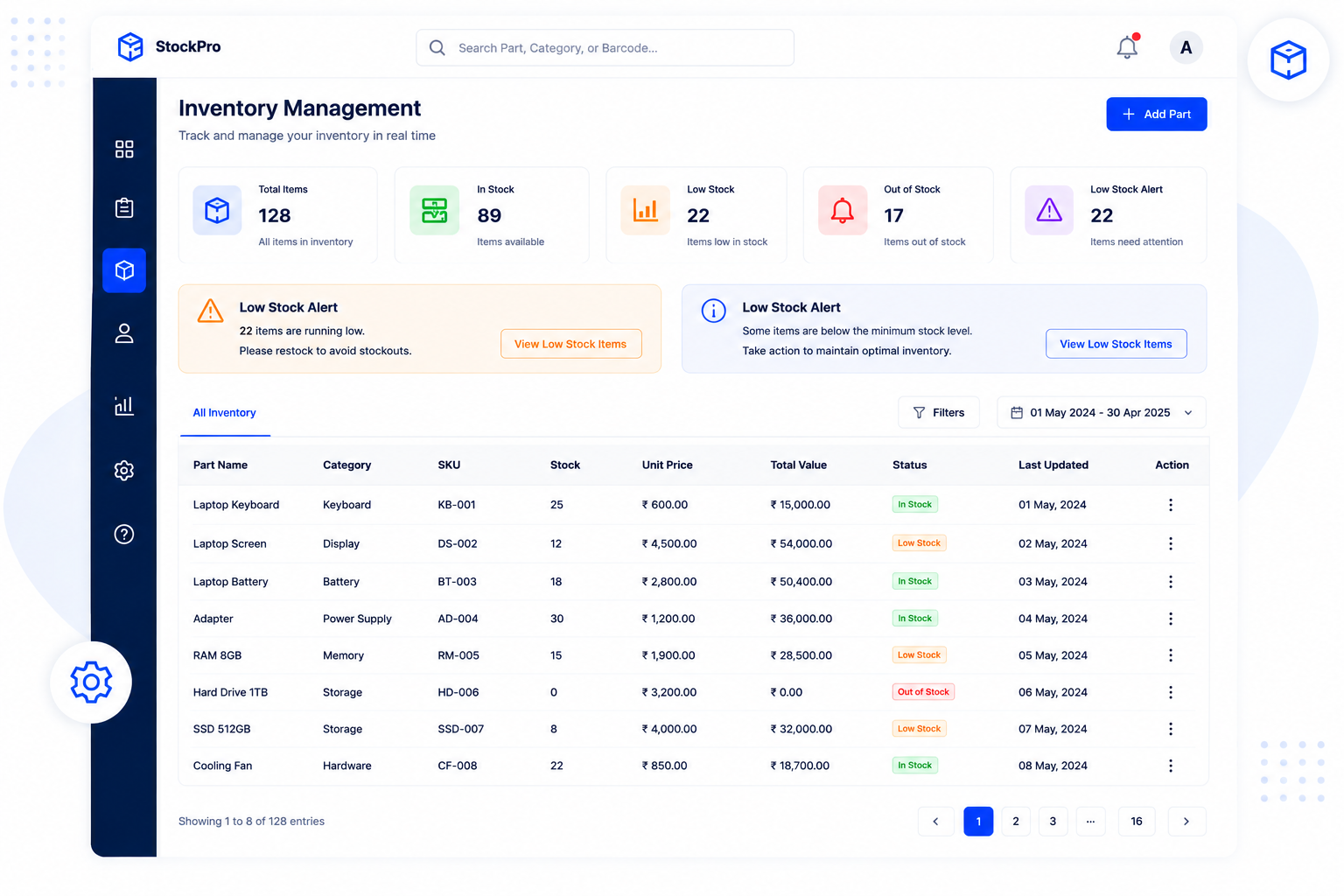
Laptop repair shop software is only as good as its parts tracking. When a customer needs a Dell XPS battery or an Asus ROG keyboard, you need to know instantly whether it’s on the shelf or three weeks out. BytePhase’s inventory management ties every part to the brand and model it fits, so you stop over-ordering SSDs you already have and stop losing sales to “let me check the back.”
Low-stock alerts fire before you run out of charging ports or hinges, and every part consumed on a ticket is deducted automatically, with no manual stock adjustments at closing time.
- Brand-wise stock: Apple, Dell, HP, Lenovo, Asus, MSI, Acer
- RAM, SSD/HDD, batteries, keyboards, chargers
- Monitor panels and power boards
- Auto-deduction the moment a ticket closes
More BytePhase features for computer & laptop repair shops
Everything a repair business needs — on one platform.
AMC contracts for corporate laptop fleets and IT clients
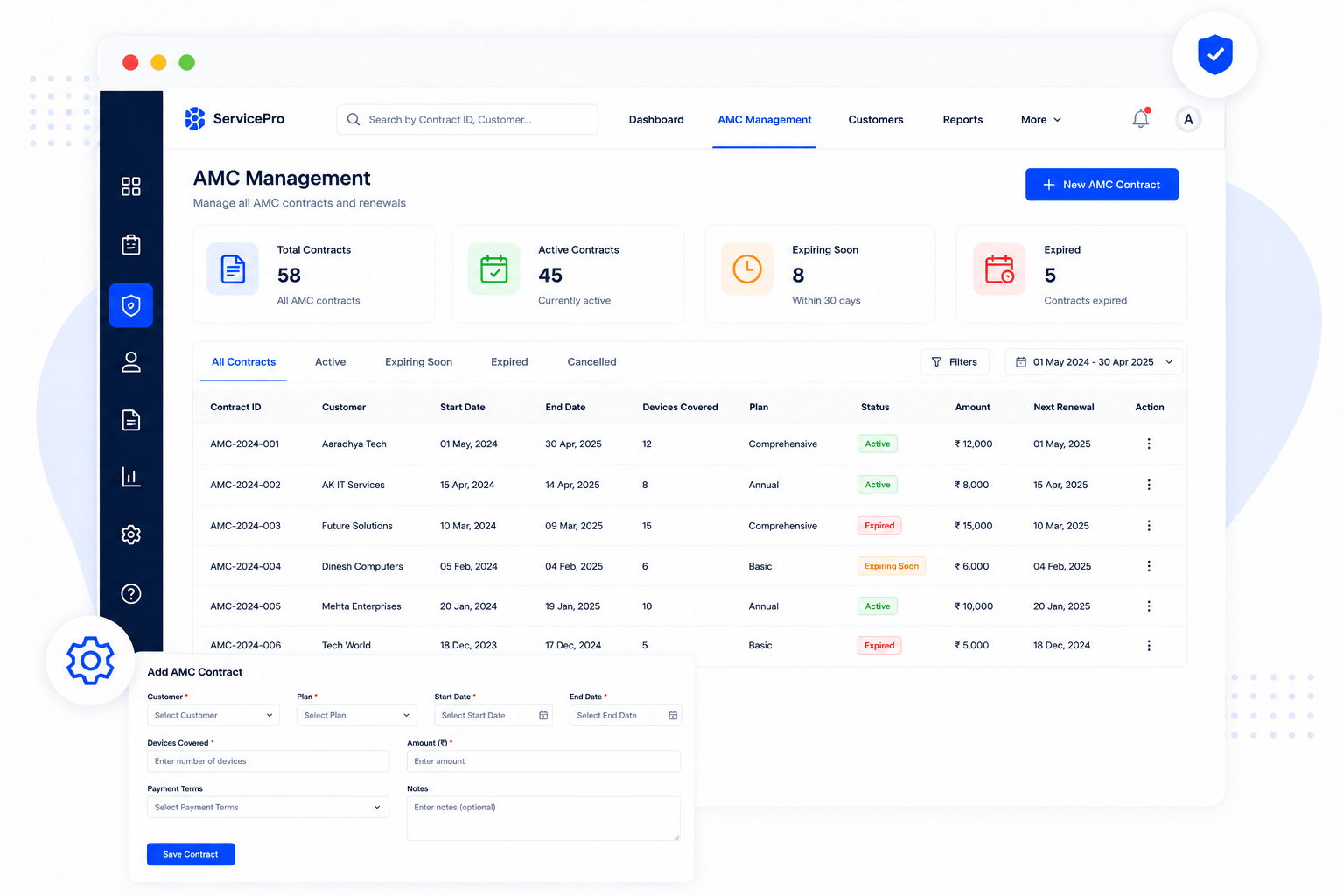
Businesses running 20+ office laptops don’t want a one-off repair bill — they want a maintenance contract with guaranteed turnaround. BytePhase’s AMC module lets you sell annual maintenance contracts covering OS reinstalls, virus removal, RAM upgrades and hardware diagnostics across a fleet of Dell, HP or Lenovo machines, then auto-renew and auto-invoice them.
You see every covered device, every visit used, and every ticket raised against a contract in one view, so when a client asks how many of their 30 laptops were serviced this quarter, you have the answer in seconds instead of digging through old emails.
WhatsApp, SMS & email updates customers actually read
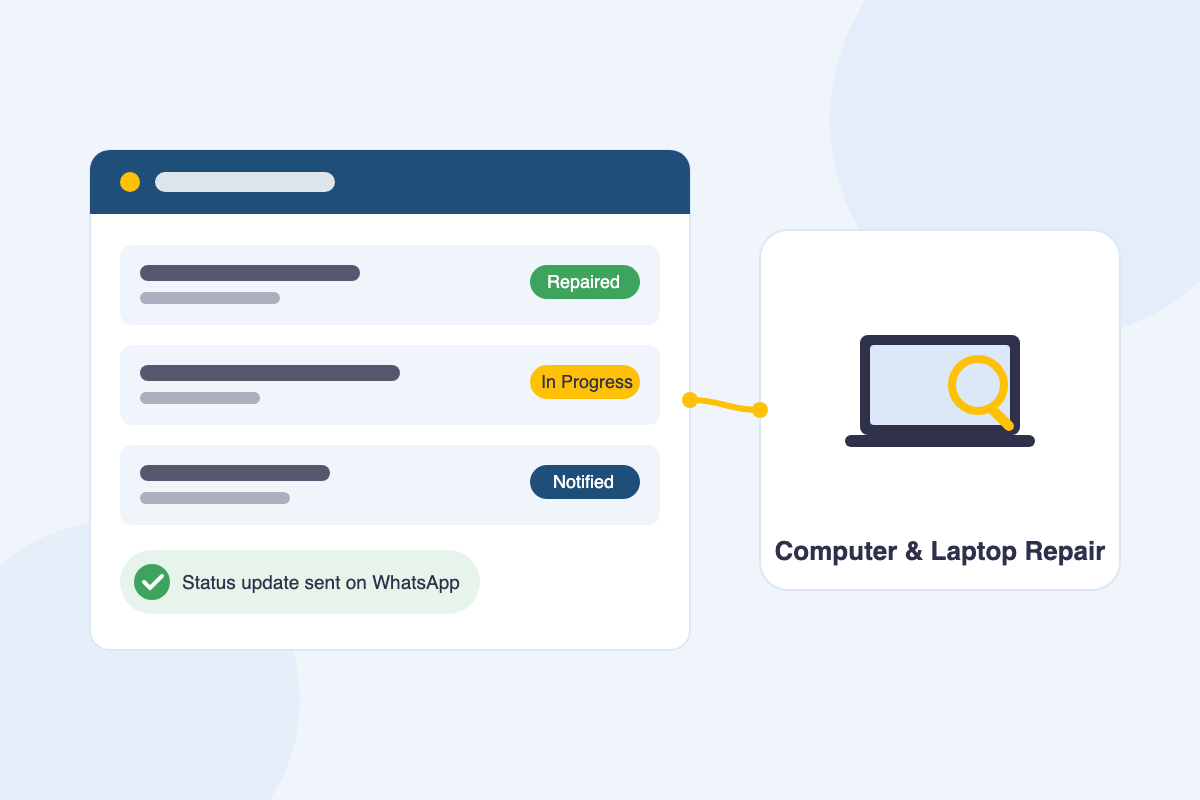
Nobody wants to call a shop to ask if their laptop is ready. BytePhase sends automatic WhatsApp, SMS and email updates at every stage — received, diagnosed, awaiting approval, repaired, ready for pickup — so your front desk isn’t fielding the same “any update?” call ten times a day.
For a virus removal job or a data recovery case that takes days, this alone cuts walk-in interruptions dramatically. Customers get a link to track their own laptop or desktop repair status, quote approval requests land instantly, and technicians stay heads-down on the bench instead of the phone.
Self check-in, device photos and signature capture at intake
The dispute that damages a repair shop’s reputation fastest is “my laptop didn’t have that scratch when I dropped it off.” BytePhase’s self check-in lets customers log their own device details on a tablet at the counter, while your technician captures device images and a digital signature before any screwdriver comes out.
This matters more on laptops than almost any other device — hinge cracks, keyboard wear and screen lines are all pre-existing conditions you need documented. Pair it with OTP-verified delivery and you’ve closed the loop from a defensible intake to a verified handover.
- Photo capture: body damage, screen cracks, keyboard condition
- Digital signature at drop-off and pickup
- OTP verification before device release

POS, quotations and GST-compliant invoicing
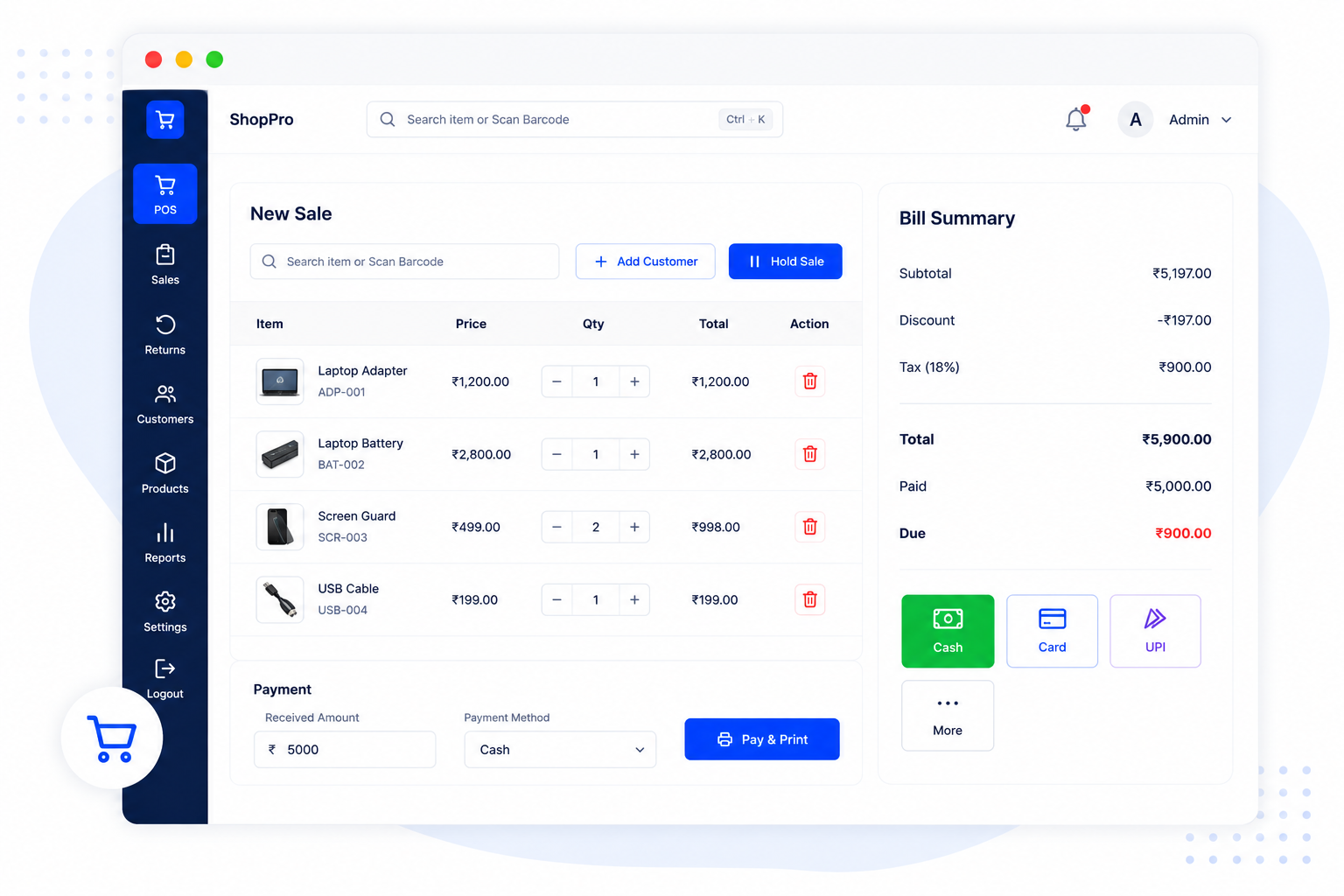
A RAM upgrade quote, a motherboard repair estimate, a bundled sale of a laptop bag and wireless mouse — your billing needs to handle repair labor and retail sales in the same counter transaction. BytePhase’s POS and quotation module lets you quote parts and labor separately, get customer approval before repair, then convert straight into a GST-compliant invoice.
UPI and PhonePe payment integration means walk-in customers pay on the spot without you chasing a bank transfer later, and every invoice ties back to the original ticket for a clean audit trail come tax season.
Why computer repair shop businesses switch to BytePhase
Most computer and laptop repair shops start on a spreadsheet and a WhatsApp group, until a Dell motherboard job gets lost between three chat threads and a customer walks in furious. Others try a per-store-priced platform that charges more the moment they open a second branch. BytePhase charges one simple monthly rate with multiple branches on the Enterprise plan, backs it with a full 15-day free trial — everything unlocked from day one — and already runs 2,000+ repair and service businesses across 40+ countries. See plans for your country → You get ticket management, inventory, AMC and WhatsApp automation in one system, without renegotiating pricing every time you grow.
Explore more from BytePhase
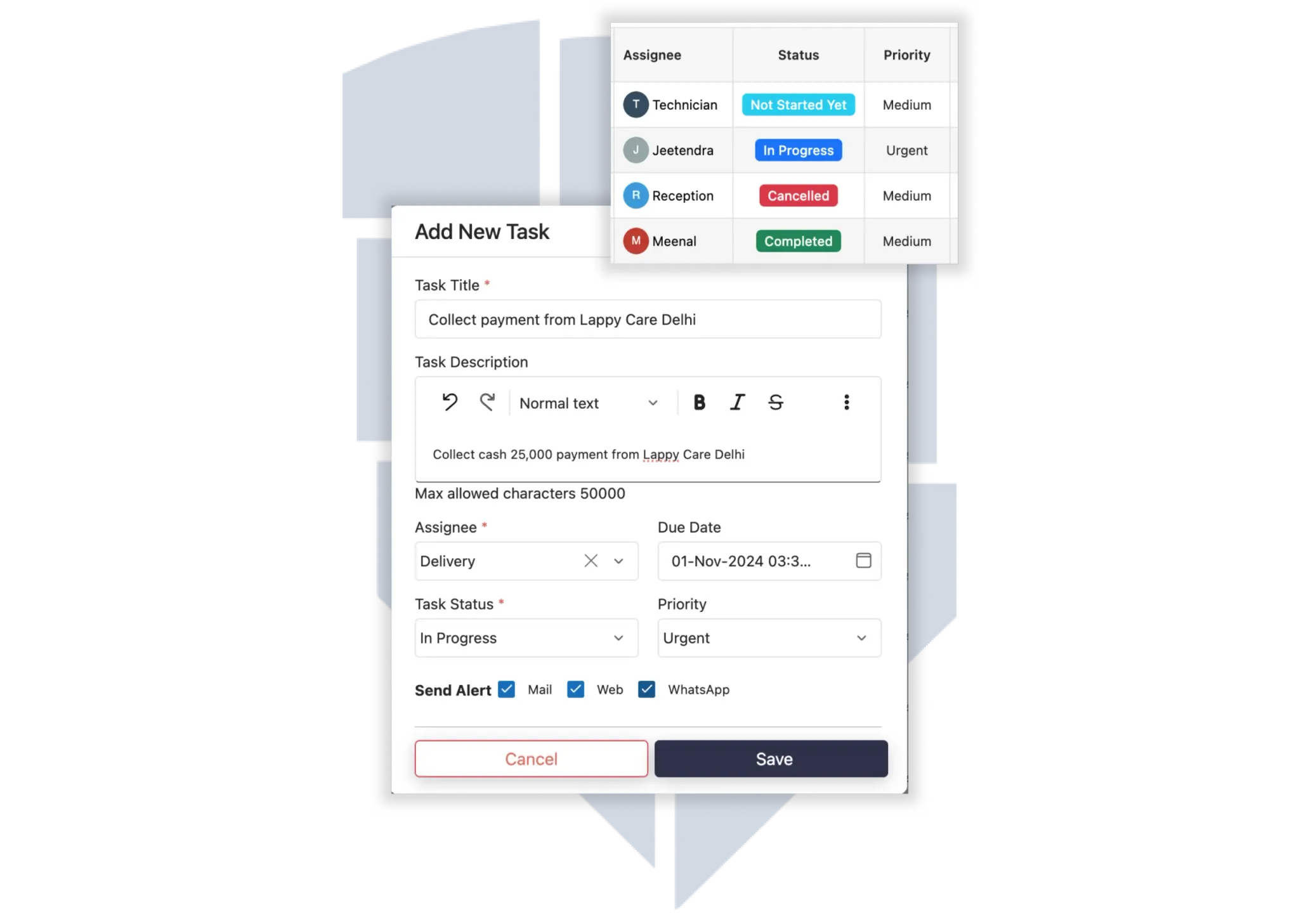
- task management for repair technicians
- outsource management for board-level repairs
- electronics repair shop software
- cell phone repair management software
For recognised computer-technician certification standards, see CompTIA.
Frequently asked questions
The main benefits are access from any device anywhere, no server to maintain, automatic backups and real-time sync. With cloud-based software like BytePhase there is nothing to install: repair tickets, inventory and customer records are backed up automatically and synced across web, Android and iOS, so staff at the front counter, the workbench or working remotely all see the same up-to-date information. You also get automatic updates and no per-device license fees.
Prioritise fast repair-ticket creation, device and warranty tracking, spare-parts inventory, automated customer notifications (SMS, WhatsApp, email), barcode support, integrated invoicing and payments, technician assignment, and native mobile apps so your team can work from anywhere. BytePhase brings all of these together in one cloud platform built specifically for repair shops.
Yes. Every job card records the device details, the fault, the parts used and the technician assigned, and links to your parts inventory so stock updates automatically as repairs are completed. You can record warranty terms per device and see the full repair history for any returning customer.
Yes. You can add your whole team, assign tickets to individual technicians and monitor their workload and performance. Because BytePhase is fully cloud-based, it also supports multiple branches on the Enterprise plan: each branch keeps its own data, and one login opens every branch.
Yes — you can start with a free trial that gives you full access, so you can set up your shop and create your first repair ticket before you commit.
Computer repair shop software is a cloud platform that manages repair tickets, parts inventory, quotations, invoicing and customer updates for computer and laptop repair businesses. BytePhase tracks every laptop, desktop and monitor from intake to pickup, with device photos, WhatsApp and SMS updates and OTP-verified handover — so your bench runs on one system instead of spreadsheets and chat apps.
Yes. BytePhase works as PC repair shop software and computer repair store software — raise a repair ticket for each PC or laptop, track parts like RAM, SSDs and batteries, send estimates, take card, cash and UPI payments, and manage multiple technicians from one dashboard, with multiple branches on the Enterprise plan.
Yes. BytePhase automatically sends WhatsApp, SMS and email updates at every stage of a repair — check-in, diagnosis, estimate approval and ready-for-pickup — so your front desk is not answering status calls all day. Messages trigger straight from the ticket, with no manual typing.
Yes. Each shop’s data is isolated, and BytePhase supports 100% white-label branding with your own custom domain, so your customer portal looks entirely like your brand. Device photos, signatures and repair history stay tied securely to each ticket.
A few open-source repair and ticketing projects exist, but they are self-hosted: you provide the server, updates, backups and security, and there is no support team behind them. For most repair shops the time that takes costs more than a managed cloud platform. BytePhase is cloud-based computer repair shop software — you can try every feature free for 15 days before deciding.
Last updated: 6 October 2026