
Repair Ticket Handling Process: A Step-by-Step Guide for Repair Shops

The Repair Ticket Handling Process, Step by Step
Every repair job that comes through your door becomes a ticket, and how that ticket moves from intake to pickup is what separates a chaotic front counter from a shop customers trust. This guide walks through the repair ticket handling process used inside BytePhase, stage by stage — how a shop notifies customers, assigns jobs, tracks parts, sends quotations, records payment, and verifies delivery. Whether you run a computer repair shop, a mobile repair shop, or a multi-brand service center, the same lifecycle applies; only the parts and turnaround times change. Understanding each stage helps you spot exactly where tickets stall today, and what an efficient ticket handling workflow should look like once it’s fixed.
Notifications and Communication
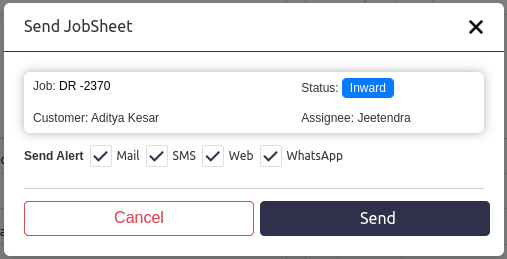
The first stage of the repair ticket handling process is keeping the customer informed without your front desk making a single phone call. BytePhase’s ticketing system sends automated updates over SMS, email, WhatsApp, and push notification at every stage of a job — from acceptance and diagnosis through to completion and pickup. A customer who dropped off a laptop with a cracked screen can watch the ticket move from “diagnosis” to “parts ordered” to “ready for pickup” without calling the shop once. That visibility builds trust early, and it’s the foundation the rest of the ticket handling workflow builds on.
Job Assignment
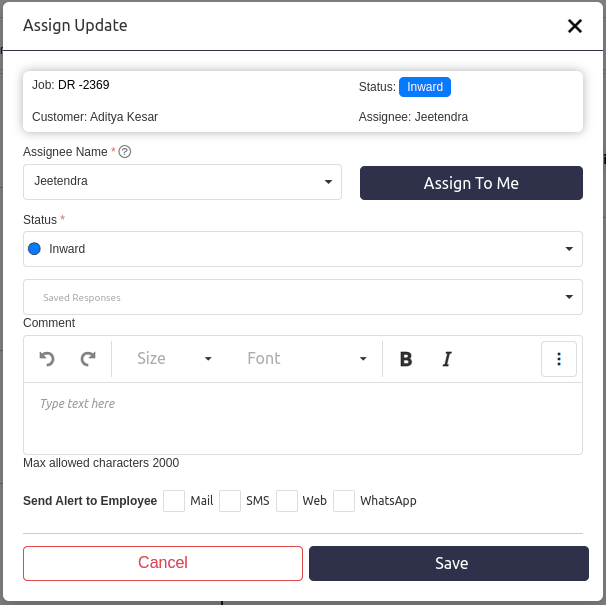
Once a ticket is logged, the next step in the repair job ticket workflow is assignment. A manager or shop owner assigns each ticket to a specific technician based on skill — a jewelry repair specialist doesn’t need to see AC service tickets, and a phone technician shouldn’t be juggling laptop motherboard jobs. This even distribution stops one technician from becoming a bottleneck while others sit idle, and it gives every job a named owner from the moment it’s opened. When something goes wrong later in the process, you always know who to ask.
Adding Services and Parts
As diagnosis moves into repair, technicians add the services performed and the exact spare parts used directly inside the ticket — a replacement screen, a battery, a logic board. This does two things at once: it builds the cost estimate line by line instead of guessing at a number, and it deducts stock automatically, which is what real inventory management software should do without a separate spreadsheet.
Over time, this same data shows which parts move fastest, which ones sit on the shelf, and when it’s time to reorder before a technician is stuck waiting on a part mid-repair.

Creating a Quotation
Once the services and parts are added, the ticket itself generates a quotation with a full cost breakdown — no retyping figures into a separate invoicing tool. That quote can be sent to the customer’s phone in seconds, so there’s a written record of exactly what was estimated before any work begins. For an owner, this single step removes most of the “you never told me it would cost this much” disputes that eat into technician time and customer goodwill.
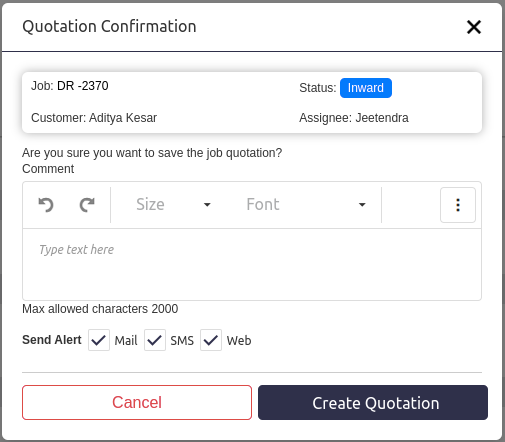
Requesting Quotation Approval from Customer
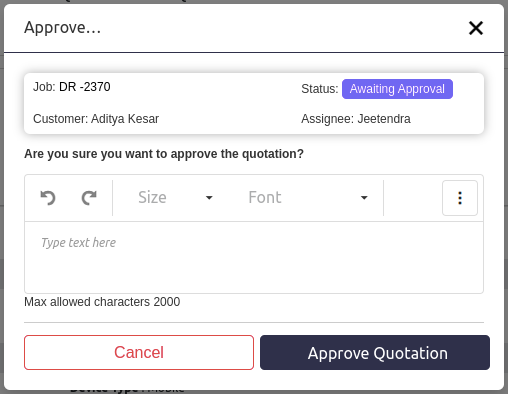
Customers can approve the quotation directly from the link they receive, without a phone call or an in-person visit. If they have a question — why a part costs what it does, or whether a cheaper alternative exists — they can add a comment straight on the ticket, and the shop replies in the same thread. This two-way approval step protects the shop, since nothing proceeds without sign-off, and protects the customer, since nothing is billed as a surprise.
Employee Notes
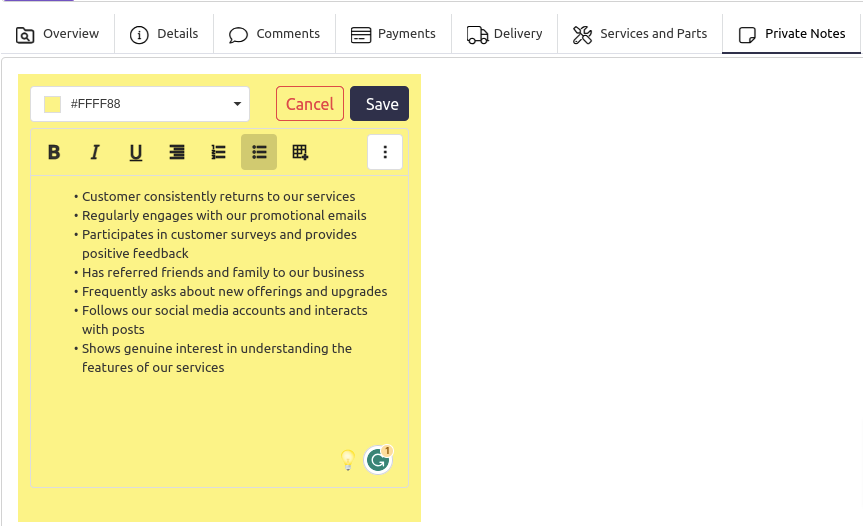
Not every note belongs on the customer-facing side of a ticket. Employee notes are private, visible only to staff, and they’re where a technician logs the details that actually matter for a clean handoff — a stripped screw, a part that arrived with a different connector than expected, a customer who mentioned dropping the device in water even though that wasn’t the stated fault. If a second technician has to pick up a ticket mid-repair, these notes are the difference between a five-minute handoff and starting the diagnosis over.
Adding Payment & Closing the Job
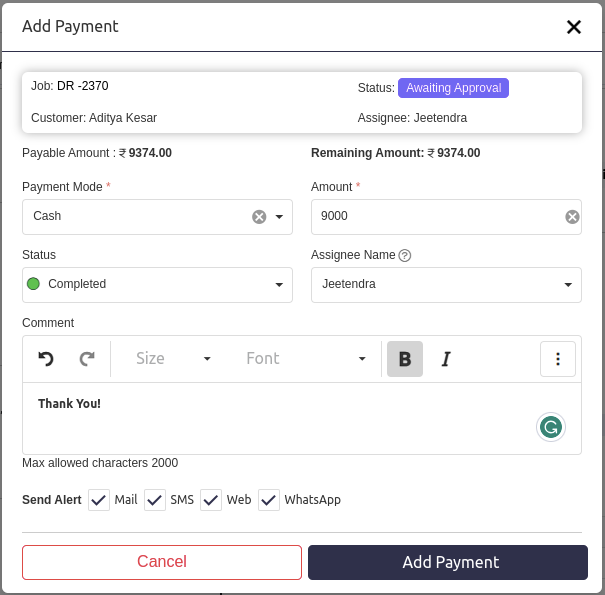
When the repair is finished, the technician closes the ticket and records the payment — UPI, card, cash, or PhonePe — against that same job. Because payment is tied to the ticket instead of a separate billing entry, every completed job in the repair shop ticketing system carries a clean, auditable record of what was fixed, what was charged, and what it cost the shop in parts. At month-end, that record is what tells you which job types are actually profitable.
Job Delivery and Ownership Verification
The last stage of the repair ticket handling process is making sure the device goes home with the right person. When a job is marked ready, the customer’s registered number receives a one-time OTP; they read it out at pickup, and only then does the ticket close as delivered. It’s a small step, but it closes a real risk — someone else picking up a phone or laptop that isn’t theirs — and it gives the shop a verifiable record that the handover actually happened, not just a memory of it.

Concluding Thoughts
BytePhase is a cloud-based repair shop management platform built specifically for repair businesses, not a generic CRM adapted to fit. Every stage in this repair ticket handling process, from the first notification to the OTP at pickup, lives inside one ticket record, so nothing gets tracked twice or falls through a gap between tools.
Beyond ticket handling, BytePhase covers what a repair shop actually runs on day to day:
- Repair tickets and job cards, created in under a minute
- Device and IMEI tracking with warranty status
- Spare-parts inventory with barcode scanning
- Invoicing and quotations, with UPI, PhonePe, and card payments
- Automated SMS, WhatsApp, and email updates
- OTP-verified delivery and a customer self-service portal
- Technician assignment and performance tracking
- Multi-branch support and AMC management
- Activity logs and configurable permissions
BytePhase runs on the web and as native Android and iOS apps, with no per-device limit, and is used by 2,000+ repair businesses across 32+ countries.
Conclusion
A repair shop lives or dies on how well it handles its tickets — how fast a customer hears back, how clearly a technician knows what to do next, and how confidently a device goes home with the right owner. That’s what good repair ticket management looks like in practice: one system carrying every ticket from intake to OTP-verified delivery, instead of a notebook, a WhatsApp group, and a spreadsheet trying to do the same job separately.
If your shop is still juggling tools to do what a single ticket should handle, BytePhase offers a 15-day free trial — enough time to run real tickets through it and see whether the workflow above fits how your shop actually works.