

The Future of Repair Shops: AI, Robotics & Automation Trends for Owners
The Future of Repair Shops: What’s Already Changing
The future of repair shops is arriving in smaller, more practical steps than the sci-fi version most owners picture. Nobody is installing a robot technician on the bench next month. What’s actually happening is quieter: shops that used to run entirely on paper tickets and phone calls are now using software that tracks a device from drop-off to pickup, messages a customer automatically the moment a job status changes, and routes tickets to the right technician without a manager standing over the queue.
That’s automation, and it’s already paying for itself in busy shops. The real question for an owner isn’t whether AI and robotics will change the repair industry — it’s which parts of that change are real and worth adopting now, which are still a few years out, and which parts of the job should probably stay in human hands no matter how good the tools get. This piece walks through all three, without the hype.
What Automation Already Looks Like in a Repair Shop Today
Before talking about what’s next, it’s worth being honest about what’s already running in well-managed repair shops — because a lot of “repair shop automation” isn’t experimental anymore, it’s just software that most shops haven’t adopted yet.
Automated status updates
A customer drops off a phone or laptop and gets an SMS or WhatsApp message the moment the ticket is created, another when the technician starts work, and another when it’s ready for pickup — with zero staff time spent typing out each message. This alone removes one of the most common sources of front-desk friction: the “is my device ready yet?” phone call.
Ticket routing and technician assignment
Instead of a manager manually deciding who picks up the next repair, software can route a job card to a technician based on device type, current workload, or specialization, and track how long each stage takes. Over time that history becomes a record of which technician is fastest and most accurate at which repair type — useful for training, useful for scheduling.
Diagnostics tooling
This is the part closest to “AI in repair shops” as people usually picture it, but the reality today is narrower than the marketing. Diagnostic software and built-in device utilities can already flag battery health, run automated hardware tests, and surface error codes faster than a fully manual check — genuinely useful, but still a tool a technician runs and interprets, not a system that diagnoses and fixes a device unattended.
Where AI in Repair Shops Is Plausibly Headed Next
None of this is guaranteed on a timeline, and any repair industry trends piece that hands you a specific year or percentage is guessing. What’s reasonable to expect, based on where the tools already are:
- Smarter triage at intake. Diagnostic tools are likely to get better at surfacing a probable cause before a technician opens the device up — narrowing down what to check first, not replacing the check itself.
- Pattern spotting across repair history. A shop that has logged years of repair tickets has a dataset most owners don’t think of as valuable — which failures cluster on which device models, which parts fail early, which fixes tend to come back as repeat repairs. Software that surfaces those patterns automatically, instead of a technician noticing by memory, is a realistic near-term step.
- Better scheduling and resource allocation. Matching technician skill and current load to incoming jobs is already partly automated; it will likely get more precise as more of the day-to-day workflow is captured digitally.
- More conversational customer support. Chat-based assistants that answer routine questions — pricing ranges, turnaround estimates, warranty status — can plausibly take over more of the repetitive front-desk conversation, freeing staff for interactions that actually need a person.
Treat this as a direction, not a roadmap. Shops that wait for a fully-formed “AI repair assistant” product will wait a long time; shops that adopt the automation already available are already ahead.
Robotics in Device Repair: Precision Tools, Not Robot Technicians
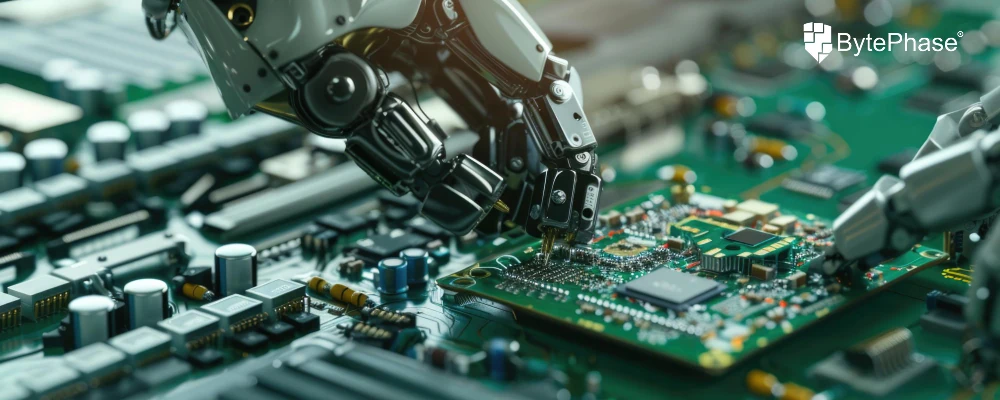
Robotics gets the most attention in “future of repair shops” conversations and delivers the least, at least for now. A general-purpose robot that opens a phone, replaces a screen, and reassembles it correctly is a much harder problem than it sounds — repair work involves too much variation in device condition, adhesive, prior damage, and non-standard cases for a robot to handle reliably without a person supervising.
Where robotics and precision automation genuinely show up on the repair bench:
- Automated or assisted soldering and rework stations for micro-component work, where consistency matters more than judgment.
- Precision jigs and fixtures that hold a device steady during a delicate step, reducing the chance of a slip that damages the board.
- Automated parts retrieval and inventory handling in larger operations, cutting the walk-and-search time between the counter and the storeroom.
These are tools that make a skilled technician faster and more consistent, not replacements for one. The framing that holds up best: robotics in device repair augments the bench, it doesn’t replace it.
What Stays Human in Repair
It’s worth stating plainly what automation and AI are not close to replacing, because “future of repair shops” content tends to skip this part:
- Judgment calls on unclear damage. Deciding whether a water-damaged board is worth repairing, or whether a cracked screen has hidden internal damage, still depends on a technician’s experience with edge cases no dataset fully covers.
- Customer trust conversations. Explaining a diagnosis, setting expectations on cost and turnaround, and handling a frustrated customer is relationship work, not a workflow to automate away.
- Non-standard repairs. Older devices, custom builds, and physically unusual damage all require improvisation that rule-based or pattern-based tools aren’t built for.
- Final quality checks. However good diagnostic tooling gets, someone still needs to confirm the device actually works the way the customer expects before it goes out the door.
The realistic version of the future of repair shops isn’t technicians being replaced — it’s technicians spending less time on data entry and status calls, and more time on the repairs that need an actual expert.
How to Prepare Your Repair Shop for What’s Next
You don’t need to wait for the next wave of AI to get ready for it. The shops best positioned for whatever comes next in repair industry trends are the ones already doing three things:
- Capture data instead of losing it. Every repair ticket, part used, and diagnostic note is only useful later if it’s recorded somewhere searchable. A shop still running on paper or scattered spreadsheets has no data trail to build on — a repair shop management software system that logs every ticket, device, and part is the foundation everything else sits on.
- Automate what’s already automatable. Status updates, ticket routing, invoicing, and inventory alerts don’t need to wait for “AI” — that automation exists today and pays back immediately in staff time.
- Keep technicians trained on judgment, not just tools. As more of the repetitive work gets automated, the technicians who stay valuable are the ones good at the calls a machine can’t make — diagnosing unclear damage, handling edge cases, talking to customers.
None of this requires a big technology bet. It requires picking software that already does the boring parts well, so the shop is ready to layer on whatever comes next instead of retrofitting a paper-based operation under pressure.
BytePhase is built around the same idea: give a repair shop the operational backbone first, so the shop is ready for whatever automation comes next.
- A clean data trail. Every repair ticket, device and IMEI record, warranty note, and part used is logged automatically, creating the repair history a shop can actually learn from later — not just an archive.
- Automation that already works. Job cards created in about 60 seconds, automated SMS/WhatsApp/email status updates, OTP-verified delivery, and barcode-tracked inventory alerts are running in shops today, not on a roadmap.
- Technician performance visibility. Assignment and reporting tools show which technician handles which repair type best, so training and scheduling decisions are based on real numbers instead of guesswork.
- Room to grow. Multi-branch support, AMC management, and a customer portal mean the same platform scales from a single counter to a multi-location operation without a re-platform.
The future of repair shops will keep changing what’s possible on the diagnostic and robotics side. What won’t change is that shops need a reliable operational core underneath it — accurate tickets, fast payments, honest inventory, and a way to talk to customers without chasing them down.
If your shop is still running on spreadsheets and phone calls, that’s the place to start. BytePhase offers a 15-day free trial, so you can see how much of this automation your shop is ready for today.