

7 Best Auto Repair Software Options in 2026 (Honest Comparison)
The best auto repair software for most garages comes down to four things: a fast digital work-order flow, tax-ready invoicing, live parts inventory, and automatic customer updates — all without a price tag that climbs every time you open a new bay or branch. This guide is made for garage owners and workshop managers comparing tools for their own bays. Below is an honest, feature-by-feature look at seven options — BytePhase, ARI, Shopmonkey, AutoLeap, Tekmetric, Mitchell 1, and Orderry — so you can match the right one to your shop’s size, region, and workflow instead of just picking whichever ranks first on Google. Below, we compare the seven best auto repair software options shop by shop. Already running a garage and want one system end to end? Start with BytePhase’s auto repair shop software page.
Quick answer: single-bay garage on a budget → ARI. US shop that lives in a visual job board → Shopmonkey or Tekmetric. Garage or multi-branch chain that wants flat pricing, estimate-to-invoice in one flow, and WhatsApp-first customer updates → BytePhase. Detailed, feature-by-feature reasoning below.
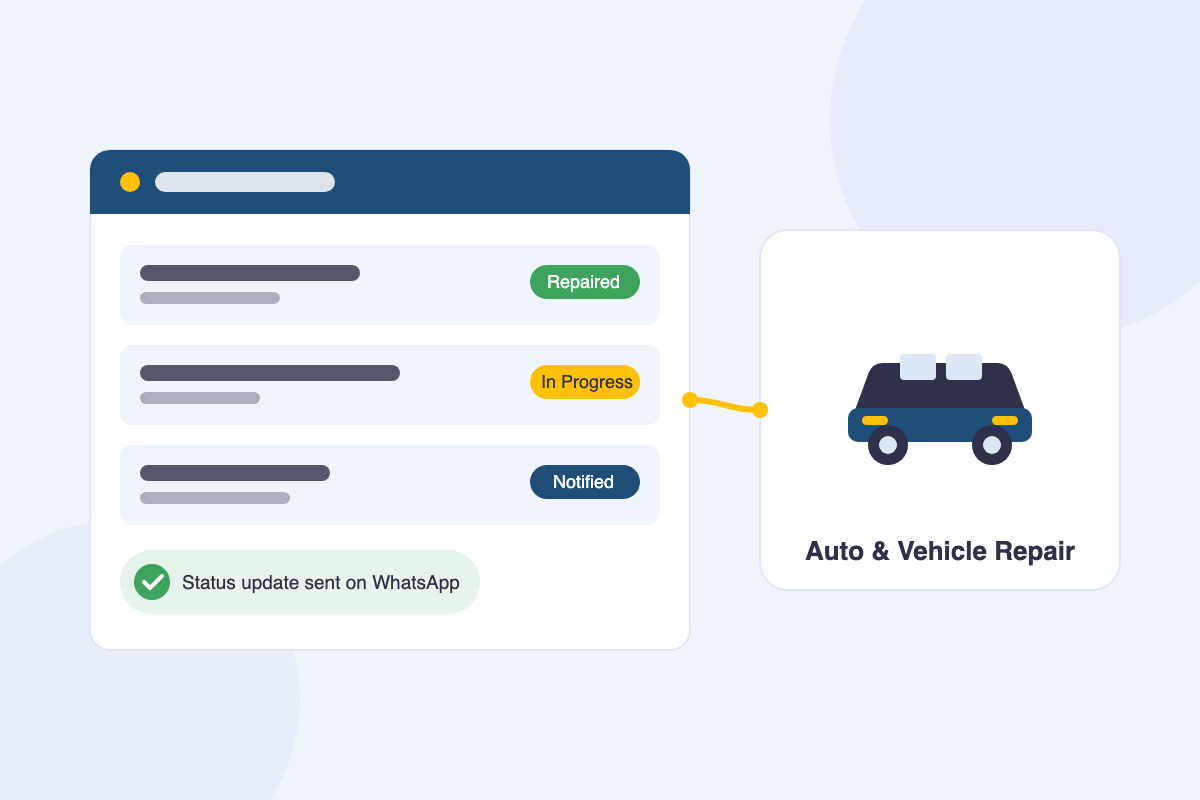
Here’s how each one stacks up — what it’s known for, its standout features, and the shop type it actually fits best. None of these platforms is objectively “worst”; a tool built for a single-bay independent garage and a tool built for a five-branch chain will naturally look different on paper, so read the best-fit line at the end of each section as closely as the feature list itself.
1. BytePhase — flat multi-branch pricing, WhatsApp-first updates
BytePhase is built for garages and multi-branch chains that want one system for the whole repair workflow, rather than a patchwork of a billing app, a WhatsApp group, and a parts spreadsheet. See how it works as dedicated garage management software for independent garages and vehicle workshops. Every job starts as a digital repair ticket that moves from estimate straight to invoice without re-typing anything, with GST-ready invoicing and counter billing built into BytePhase’s auto repair shop software. The invoicing side also runs as dedicated auto repair invoice software, separating labor, OEM versus aftermarket parts, and the diagnostic fee clearly so nothing gets disputed at the counter.
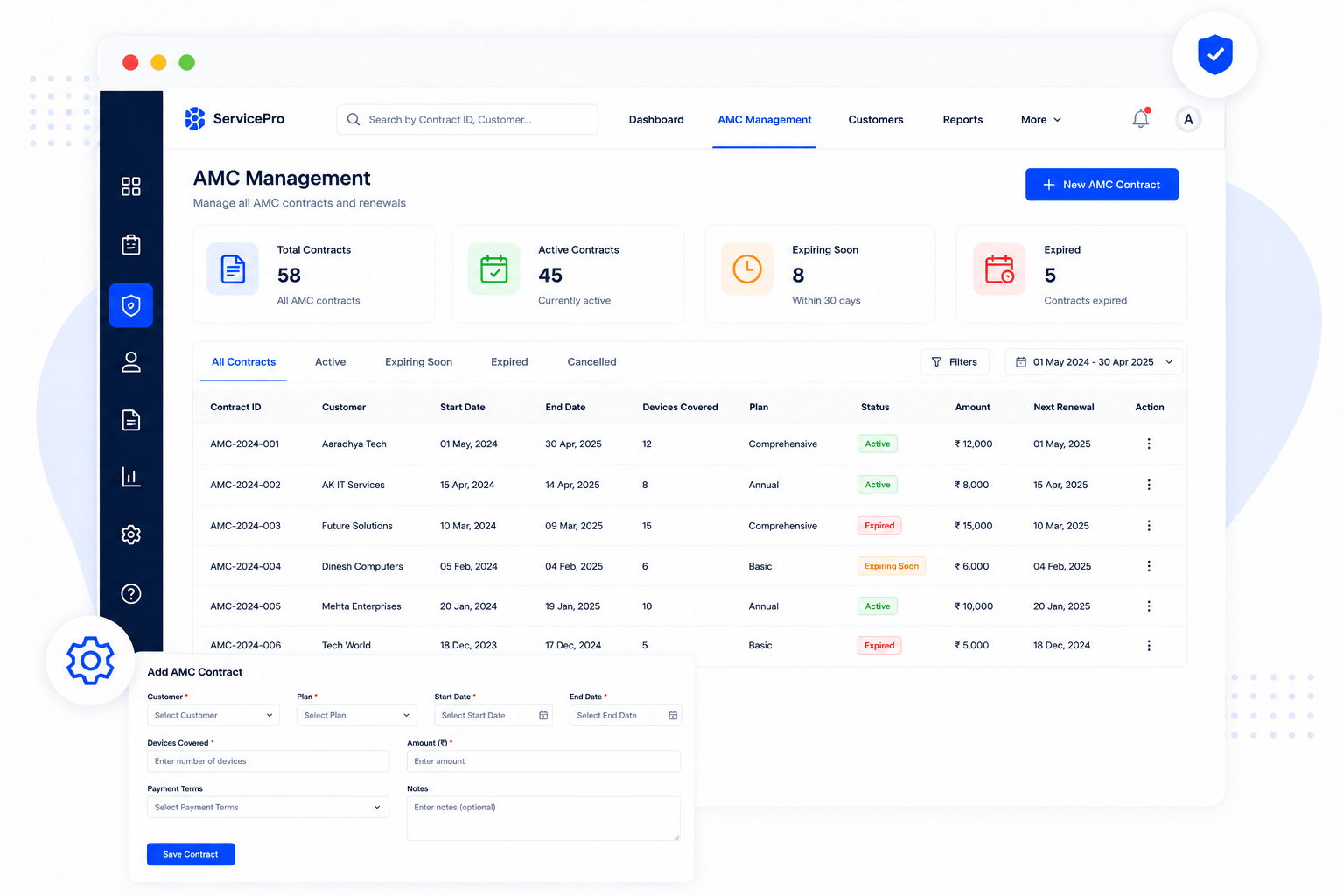
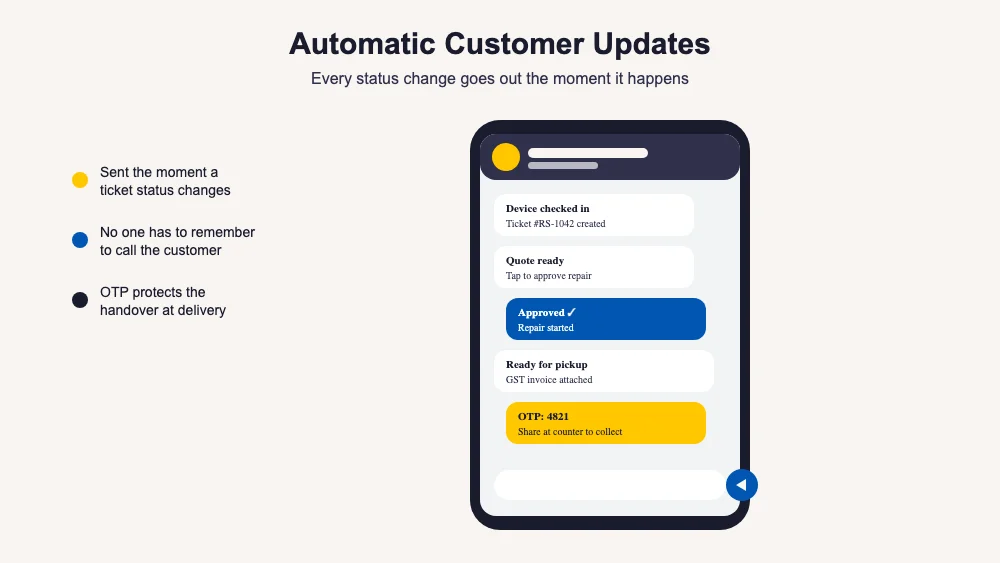
Parts and fluid stock — engine oil, filters, brake pads, coolant — is tracked at the SKU level through built-in inventory management, with low-stock alerts and automatic deduction per job, and AMC or fleet maintenance contracts renew and remind on their own instead of living in a spreadsheet. What sets BytePhase apart for garages specifically is the update layer: customers get automatic WhatsApp, SMS, and email updates at check-in, estimate approval, and pickup, and vehicle handover is OTP-verified with signature capture and time-stamped photo documentation, so there’s no dispute over what was wrong (or right) with the car at drop-off. Pickup and drop scheduling adds live location tracking for shops that collect vehicles from a customer’s home or office.
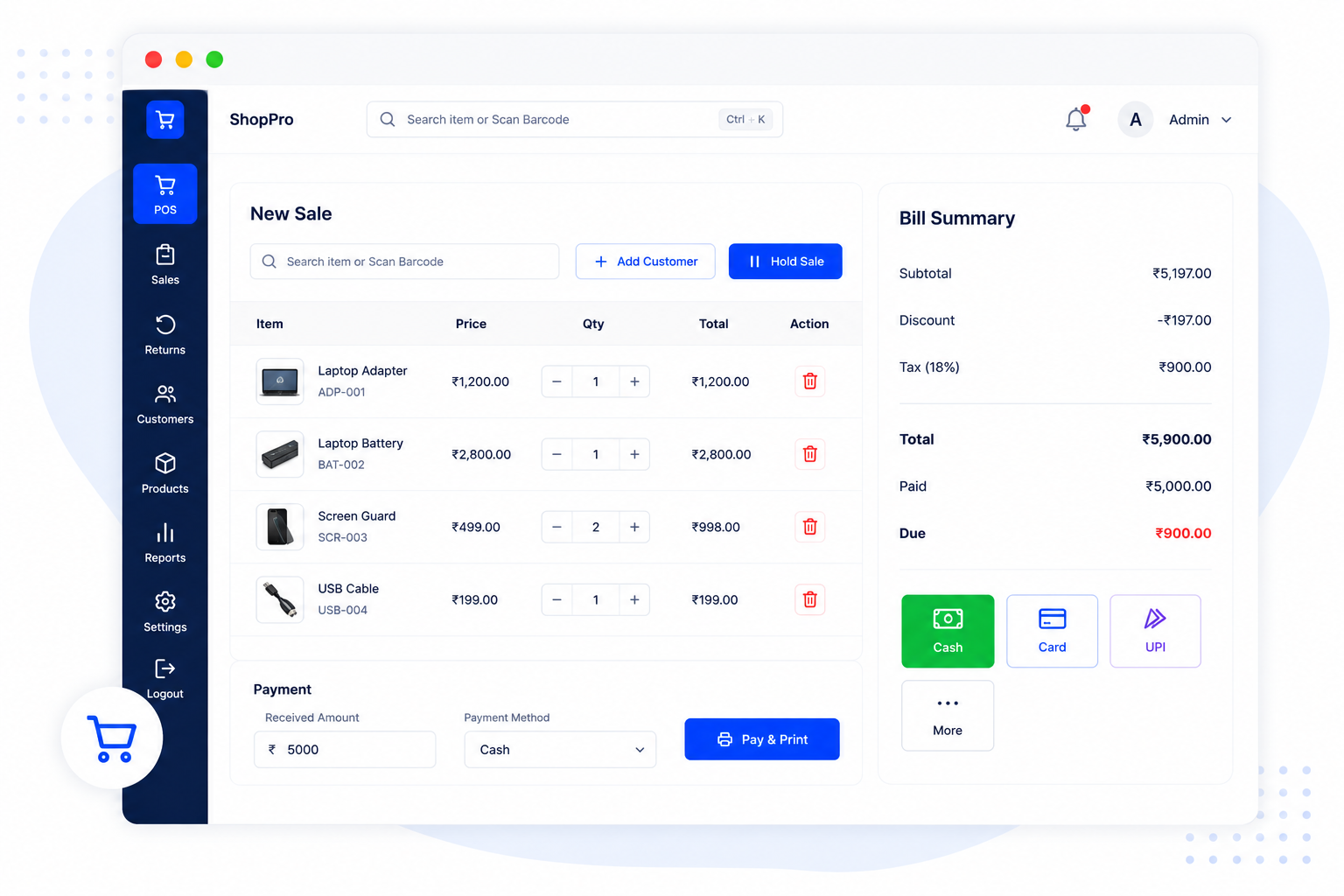
The practical difference for a multi-branch operator: BytePhase’s Enterprise plan includes multiple branches under one login, rather than a separate subscription for every location. It runs on web, iOS, and Android, is backed by 24/7 support, and is used by 2,000+ repair businesses across 32+ countries. There’s a 15-day free trial, so you can test the ticket-to-invoice flow against your own jobs before deciding anything.
Best fit: independent garages and multi-branch or franchise chains that want flat, predictable pricing and WhatsApp-first customer communication without buying separate tools for messaging and inventory.
2. ARI — simple, budget-friendly invoicing
ARI is known in the auto repair software space for value pricing — it’s popular with independent, single-bay garages that want a straightforward repair-order and invoicing workflow without a steep learning curve or a long list of add-on modules to configure. The focus stays on the fundamentals: opening a repair order, quoting parts and labor, and getting an invoice out the door, rather than a wide feature set covering fleets or multi-location reporting.
Best fit: a solo-owner or single-location garage that wants simple, affordable invoicing and doesn’t yet need multi-branch reporting, fleet/AMC contracts, or built-in customer messaging.
3. Shopmonkey — a visual US shop workflow board
Shopmonkey is a well-known, US-focused shop management platform built around a visual workflow board — jobs move across columns from estimate to ready-for-pickup, which makes it easy for a service advisor to see the whole bay at a glance. It’s known for digital vehicle inspections with photo and video attachments, two-way texting with customers, and integrations with common parts-ordering catalogs, all wrapped in a modern, actively marketed interface.
Best fit: independent and small multi-location US repair shops that want a modern, visual job board and are comfortable with a category-leading, heavily marketed platform.
4. AutoLeap — business analytics and coaching
AutoLeap markets itself heavily to North American shop owners who want the software paired with business coaching and reporting — dashboards on labor efficiency, technician productivity, and average repair order value sit alongside the usual estimate-to-invoice flow. It also offers digital vehicle inspections and appointment scheduling as part of the core package.
Best fit: a growth-minded independent US or Canadian shop owner who wants built-in business analytics and coaching resources layered on top of day-to-day repair-order software.
5. Tekmetric — US shop workflow depth
Tekmetric has built a strong reputation specifically around US shop workflow depth — repair order creation, technician time tracking, parts-ordering integrations, and reporting are all built for how an American general-repair or specialty shop actually runs its day, scaling from a single bay to a multi-location group. It’s frequently cited by shop owners for its reporting depth and an active user community that shares canned jobs and best practices.
Best fit: established US repair shops and small multi-shop groups that want mature, workflow-specific tooling and are comfortable working within a US-centric feature set.
6. Mitchell 1 — repair-information heritage
Mitchell 1 comes from decades in automotive repair information — its ProDemand repair and estimating data (OEM procedures, wiring diagrams, labor times) is a long-standing industry reference, and its Manager SE shop management software is built to sit right next to that lookup tool. That heritage is its real strength: shops that already lean on Mitchell 1 for diagnostic and repair information get shop management from the same vendor, in the same workflow.
Best fit: shops that use, or want, Mitchell 1’s repair-information database and prefer a single vendor for both lookup data and day-to-day management.
7. Orderry — multi-vertical repair businesses
Orderry is a broader repair-business platform — it started in general repair-shop management (electronics, appliances) and added automotive-specific templates for work orders, parts, and multi-location tracking. It covers point-of-sale, inventory, and CRM in one system and is used internationally across several repair verticals, not automotive alone.
Best fit: an operator running an auto bay alongside other repair services, or a multi-vertical repair business, who wants one platform to cover several types of repair work rather than a garage-only tool.
How to choose the best auto repair software
There is no single best auto repair software for every garage — the right pick depends on how your shop actually runs. Work through this checklist:
Feature lists look similar across every vendor above — most will claim work orders, invoicing, and reporting somewhere on their site. What actually separates a good fit from a bad one is how those features behave once you’re running three cars through a bay at the same time, not how they look in a demo. Before you commit to a contract or even a long trial, walk your own workflow through these six checks:
The best auto repair software compared at a glance
Here is how the best auto repair software options stack up at a glance:
| Software | Known for | Best fit |
|---|---|---|
| BytePhase | Multi-branch on Enterprise, WhatsApp-first updates, AMC/fleet contracts | Garages & multi-branch chains wanting one platform |
| ARI | Value pricing, simple invoicing | Solo-owner, single-bay garages |
| Shopmonkey | Visual workflow board, digital vehicle inspections | US independent & small multi-location shops |
| AutoLeap | Business analytics & owner coaching | Growth-minded North American shop owners |
| Tekmetric | US shop workflow depth, reporting | Established US shops & small multi-shop groups |
| Mitchell 1 | Repair-information heritage (ProDemand) | Shops that already use Mitchell 1 repair data |
| Orderry | Multi-vertical repair-business platform | Operators running auto plus other repair verticals |
None of these are wrong choices — they’re built for different shops, different regions, and different growth stages. A single-bay shop optimizing for the lowest possible learning curve, a US multi-bay group optimizing for reporting depth, and a multi-branch chain optimizing for flat pricing are all solving different problems, even though every vendor here uses the same words — “repair order,” “invoicing,” “customer updates” — to describe what they do. Match the tool to the problem you actually have this year, not the one you might have in three years.
If your priority is flat pricing as you add branches, automatic WhatsApp and SMS updates, and AMC or fleet contracts that renew themselves without a spreadsheet, that’s exactly what BytePhase is built around, and the 15-day free trial — full access — is the fastest way to see it against your own tickets before you decide anything.
Frequently asked questions
Look for predictable pricing as you add branches and clean separation between locations. In this comparison BytePhase is the one built with multi-branch operation as a headline feature — one Enterprise account links your branches under one login — while most US-focused tools price per user, which climbs quickly as a chain grows.
Four things carry a garage: a fast digital work-order (job card) flow, tax-ready invoicing, live parts inventory, and automatic customer updates by message. Analytics, inspection boards and marketing add-ons matter only after those four run smoothly every day.
Yes — several tools in this list are US-centric (Shopmonkey, Tekmetric, Mitchell 1), while BytePhase and Orderry serve garages internationally, including GST-style tax invoicing and WhatsApp-first customer updates common in India and similar markets.
Most tools here offer a trial or demo. BytePhase includes a 15-day free trial, which is long enough to run real work orders through it — the only reliable way to judge a workflow fit.
