
Multilingual CRM Support: Why Repair Shop Teams Work Faster in Their Own Language
Why Repair Shops Need a Multilingual CRM
Run a repair shop where technicians and front-desk staff don’t all share a first language, and you already know the friction a system creates when it only “speaks” one tongue. Whether your team is spread across Pune, Bengaluru, and Delhi, or your customers write in Hindi, Marathi, Tamil, or English, a multilingual CRM is the difference between a tool people fight and a tool people actually use.
This is where CRM language support stops being a nice-to-have and starts deciding how fast your counter staff open a ticket and how confidently a technician logs a repair. A repair shop management software that lets every user pick their own interface language isn’t just inclusive — it’s a productivity decision.
Why Multilingual CRM Support Matters for Repair Shop Teams
Think about your technicians and front-desk staff. Even within a single Indian city, your team might include people most comfortable in Marathi, Hindi, Tamil, Bengali, or English. Here’s why regional language CRM support changes how a repair shop actually runs:
1. Boosts Staff Adoption & Speed on the Floor
Ask a technician to log a repair ticket in a language that isn’t their first, and you’ll watch them slow down, second-guess field labels, and make more typos. When your intake staff, technicians, and store managers can work in their native tongue:
- Faster Onboarding: New hires learn the ticketing workflow in days, not weeks, because they’re reading familiar words instead of translating menus.
- Fewer Mis-Entries: Job cards, warranty fields, and spare-parts entries get filled in correctly the first time.
- Higher Daily Ticket Volume: A technician who isn’t stopping to decode the interface simply moves through more repairs per shift.
2. Improves the Customer Handoff
Your CRM sits between your customer and your technician. When counter staff are confident and quick in the system, that ease shows up in every interaction:
- Clearer Intake: Staff can focus on listening to the customer’s problem instead of hunting for the right field in an unfamiliar language.
- Accurate Updates: Automated SMS/WhatsApp status updates and delivery confirmations go out with the right details, because the ticket was entered correctly the first time.
- Stronger Trust: Customers notice when a shop runs smoothly — a comfortable, well-utilized CRM is part of that impression.
3. Supports India’s Multilingual Teams and Multi-Branch Growth
For shops with branches across states, a multi language repair software platform isn’t optional:
- Branch-by-Branch Flexibility: A Pune branch can run in Marathi while a Chennai branch runs in Tamil, on the same underlying system.
- Consistent Reporting: Owners still see one set of numbers across branches, regardless of which language each technician chose.
- Room to Expand: As you open new locations, staff in the new region aren’t blocked by a language they don’t read comfortably.
4. Keeps Ticket and Inventory Data Accurate
Confusing terminology is a quiet cause of bad data. A CRM in local language for every user, on one shared backend, keeps things clean:
- Fewer Entry Errors: Less language-driven confusion in device details, IMEI numbers, warranty terms, and job-card notes.
- One Data Model: Every user views their own language, but the underlying data structure stays identical, so reports and invoices stay reliable.
How Technicians and Staff Set Their Preferred Language
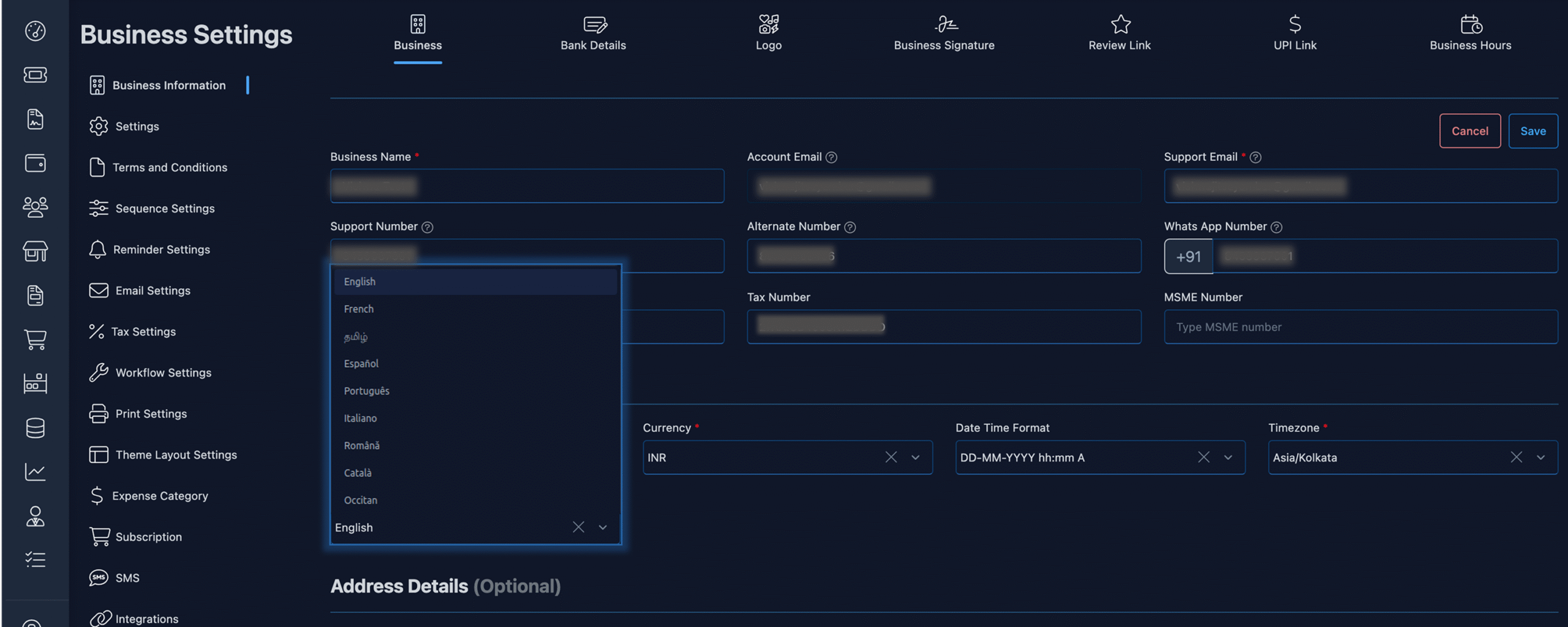
A well-built regional language CRM doesn’t stop at offering multiple languages — it lets each person on your team choose their own, independently, from their own account. In BytePhase, this takes a few clicks:
- Open Profile Settings: Every technician or staff member opens their own profile from the top corner of the app.
- Find Language Preferences: A dedicated “Language” option sits inside account settings.
- Pick a Language: A dropdown lists every supported language; the user selects the one they’re most comfortable in.
- Save and Refresh: One save, and the interface — menus, ticket fields, labels — switches immediately for that user only.
This user-by-user approach means a technician in Pune can work in Marathi while a support agent in Delhi works in Hindi and a manager reviewing reports works in English — all inside the same system, without anyone touching anyone else’s settings.
BytePhase is built as a multilingual CRM from the ground up, with 8 languages available today and new languages added on request as more shops sign up from different regions. That means your team isn’t stuck waiting on a roadmap — if your shop’s dominant language isn’t listed yet, you can ask. This is the same platform already running in 2,000+ repair businesses across 32+ countries, with web, Android, and iOS apps and no per-device limit, so the language your team picks works the same way whether they’re on the shop counter or a technician’s phone.
- Work faster and log tickets more accurately, in their own language.
- Deliver clear, confident updates to every customer.
- Onboard new technicians and branches without a language bottleneck.
- Grow across India — or beyond — without re-training staff on a new interface.
In a repair shop, speed on the floor comes from comfort with the tools. A CRM that speaks your technicians’ language isn’t a soft benefit — it’s fewer mistakes, faster tickets, and a smoother handoff to the customer at pickup.
Curious how a multilingual CRM would fit your shop? BytePhase offers a 15-day free trial, so your team can try it in their own language before you commit.