Auto Repair Shop Marketing: 15 Proven Ideas & Strategies
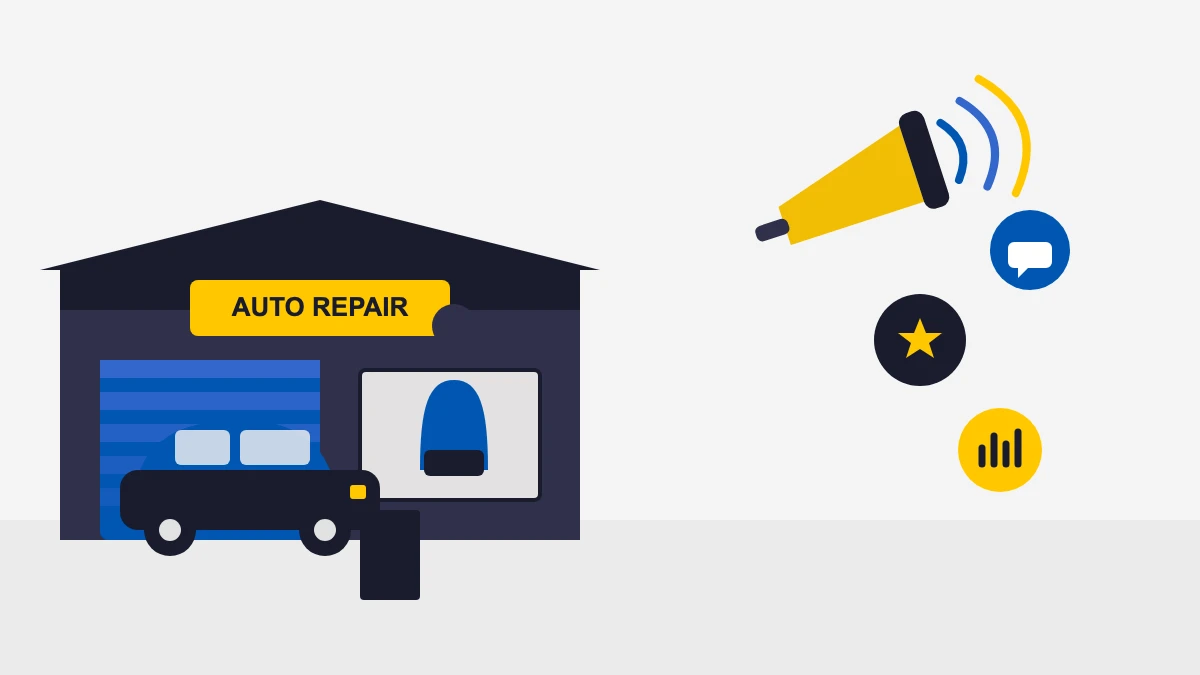
Auto repair shop marketing is the set of tactics — local SEO, reviews, referrals, automated service reminders, seasonal campaigns, and loyalty programs — that a garage or auto service center uses to win new customers and bring existing ones back before their next breakdown. Unlike a one-time retail purchase, a repair shop’s best marketing asset is the customer who already trusts you: the goal is to be found when someone searches for help, then to keep every car owner on a recurring service cycle instead of a one-off visit. Below are 15 proven ideas, ranked roughly by how quickly they pay off, that any independent auto repair shop or small garage chain can put to work this quarter.
1. Claim and Optimize Your Google Business Profile
Local search is where most auto repair jobs start — a driver’s check-engine light comes on and they search “auto repair shop near me” or “brake repair near me” that same day. Your Google Business Profile (formerly Google My Business) is the single highest-leverage marketing asset you own, because it shows up in Maps, in the local 3-pack, and in Search before your website ever gets a click. Claim and verify your listing, then fill in every field Google offers:
-
Accurate hours, including holiday hours — a shop marked “closed” during open hours loses the click entirely.
-
Service categories and the makes/models you specialize in, so you surface for the right searches instead of a generic “auto repair” query.
-
Real photos of the bay, the team, and finished work — profiles with photos get more direction requests and calls than text-only listings.
-
Regular posts about promotions, seasonal reminders, or a new service you’ve added.
Respond to every review, good or bad, within a day or two — Google’s own guidance on managing a Business Profile covers verification and response best practices in detail. A complete, active profile consistently outranks a bare-bones one, even against shops with a longer track record, because Google’s local ranking factors reward relevance, distance, and prominence — and prominence is heavily influenced by how complete and active your profile is.
2. Turn Every Repair Into a 5-Star Review
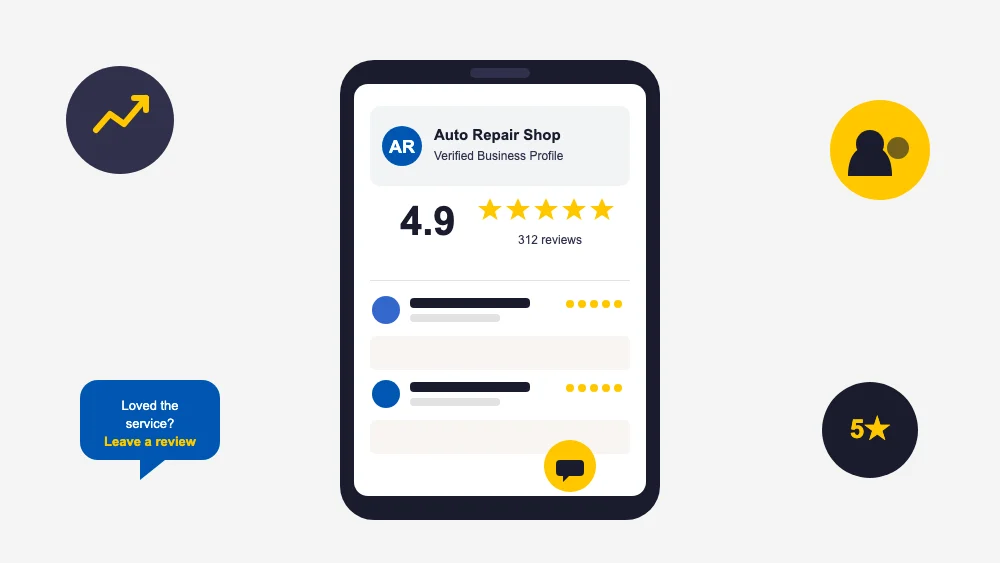
Reviews are the modern word of mouth, and for a repair shop they double as trust signals for a purchase most people don’t understand technically — nobody wants to be the person who got over-charged for a part they couldn’t verify. Ask for a review the moment a job is marked complete, not a week later when the memory has faded. The easiest way to do this systematically is to automate the ask: BytePhase can trigger a review-request message over WhatsApp or SMS as soon as a ticket status changes to “completed” or “picked up,” while the good experience is still fresh. Route unhappy customers to a private feedback form first so a bad afternoon doesn’t become a public one-star review. We cover the full playbook — request timing, response templates, and how review volume compounds over time — in our guide to earning more Google reviews.
3. Launch a Referral Program That Pays for Itself
Existing customers already vouch for you informally; a referral program just gives them a reason to do it on purpose. Offer a flat discount or a free add-on service (tire rotation, wiper blades, a multi-point inspection) for every friend or family member a customer sends your way, and make sure both the referrer and the new customer get something — one-sided programs convert far less. Track referral source at intake so you know which customers are actually driving new business; a basic lead management setup lets you tag where every new job came from, so “referral” shows up as a channel in your reporting instead of disappearing into “walk-in.”
4. Automate Service Reminders via WhatsApp, SMS, and Email
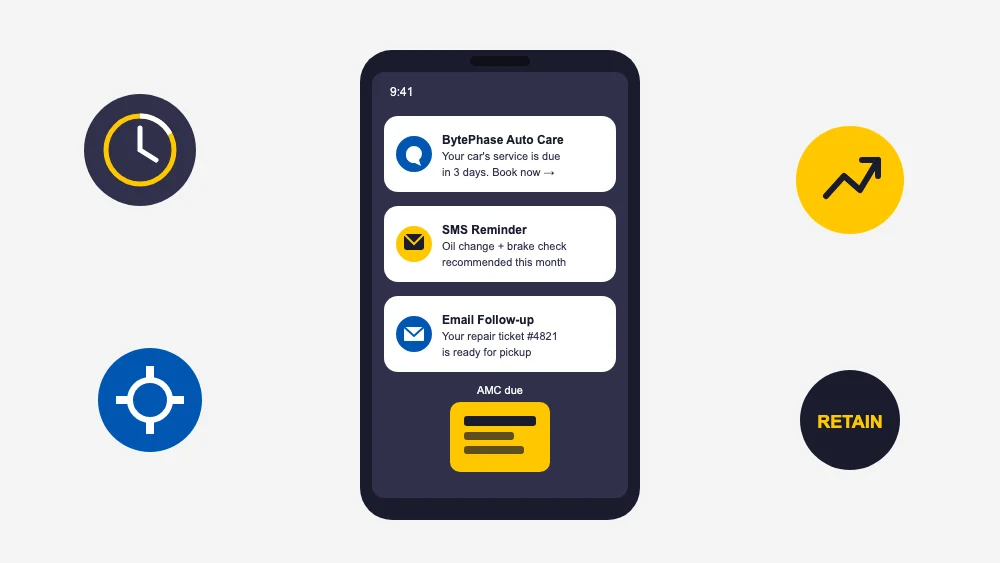
Most cars need service on a predictable schedule — oil changes, brake inspections, seasonal fluid checks — but most owners forget until something breaks. Automated reminders close that gap and turn a single job into a recurring relationship. Instead of relying on a sticky note or a spreadsheet, connect reminders to the vehicle’s actual service history so the message is specific (“your last oil change was 5 months ago, time for the next one”) rather than generic. BytePhase’s WhatsApp, SMS, and email notifications can fire automatically off ticket and job-sheet data, so reminders go out on schedule without anyone in the shop remembering to send them — this is the single highest-ROI marketing automation for a repair business because it’s aimed entirely at people who have already bought from you once.
5. Show Off Your Work: Before/After Content and Social Media
A cracked bumper made whole again, a rusted-out exhaust swapped for new, an engine bay cleaned up during a service — these are inherently visual, and they’re exactly the kind of content that performs well on Instagram and Facebook because it shows competence without saying a word. Post short before/after clips or photo pairs regularly, tag the parts or service used, and keep a consistent posting rhythm rather than a burst-and-silence pattern. If you’re building out a social presence from scratch, our step-by-step social media guide for repair stores walks through platform choice, posting cadence, and what actually gets engagement in this category.
6. Run Seasonal Campaigns That Match the Repair Calendar
Vehicle problems cluster around the seasons — winter brings battery and heating-system failures, monsoon and rainy seasons bring wiper, brake, and electrical issues, summer brings AC and cooling-system checks. Build a simple seasonal calendar and push a campaign a few weeks ahead of each peak:
-
“Winter-ready check”: battery load test, heater/defroster function, tire tread depth.
-
“Monsoon-ready check”: wiper blades, brake pads, headlight/electrical function.
-
“Beat the heat”: AC service and coolant check before peak summer temperatures.
-
“Before the road trip”: a multi-point inspection push timed to holiday travel weeks.
Seasonal campaigns work because they’re timely rather than generic — they read as helpful advice, not a sales pitch — and they give you a natural reason to re-contact your entire customer list on a fixed schedule rather than only when something breaks. Pair each seasonal push with the reminder automation from idea 4 so it goes out to the right segment without manual list-building every time — this kind of calendar-driven timing is one of the cheapest levers in auto repair shop marketing.
7. Court Fleet and B2B Customers
A single fleet or small-business account — a delivery company, a taxi operator, a local courier — can be worth more than a dozen individual walk-ins, and fleet customers value reliability and predictable turnaround over almost anything else. Pitch fleet owners directly with a simple offer: priority scheduling, consolidated monthly billing, and a dedicated point of contact. If you run more than one location, running every branch on the same system, with the same job cards and service records, makes it much easier to promise a fleet customer consistent service wherever their vehicles are — multi-branch operations can route a fleet job to whichever location has the parts and the bay time free. For overflow work you can’t handle in-house, outsource management keeps subcontracted jobs visible in the same system instead of falling through the cracks — important when a fleet client expects one shop to be accountable for the whole job.
8. Sponsor Local Events and Build Community Trust
Auto repair is a fundamentally local, trust-based business — most customers still ask a neighbor or a coworker before choosing a shop. Sponsoring a local sports team, a school car-wash fundraiser, or a community safety-inspection day puts your name in front of people in a context that has nothing to do with selling, which builds the kind of goodwill that pure advertising can’t buy. It’s inexpensive relative to paid ads, it’s genuinely appreciated by the organizations you sponsor, and it gives you content — photos, a short write-up — you can reuse in your Google Business Profile posts and social feeds.
9. Win Back Lapsed Customers With Email
Every repair shop has a list of customers who haven’t been back in 12 or 18 months, and most of them didn’t leave on purpose — they just haven’t had a reason to think of you, or they moved on to whichever shop was most convenient the day something went wrong. A short win-back sequence — a friendly check-in, a reminder of what services you offer, a modest incentive on the next visit — can recover a meaningful share of that dormant list at a fraction of the cost of acquiring a new customer through paid ads. Email works well here because it’s low-pressure and easy to automate in bulk; keep it as a blind-copy send rather than a mass “reply-all” style blast so the list stays private and doesn’t read as spam. The prerequisite is knowing who’s actually lapsed: pulling last-visit dates out of your activity logs and job history lets you build that segment accurately instead of guessing, and re-running the same win-back list every quarter keeps it from going stale again — retention work like this is consistently the highest-ROI part of auto repair shop marketing, because you’re not paying to acquire the customer twice.
10. Make Your Website and Online Booking Frictionless
By the time a driver reaches your website, they’ve usually already decided to consider you — the job of the site is not to lose them to a clunky contact form. A clear services list, transparent statement of what you specialize in, real photos (not stock art), and a booking flow that takes under a minute all matter more than a flashy design. A customer portal with online booking and repair tracking lets a driver book a slot and then follow their vehicle’s status without calling the shop, which reduces phone traffic and reads as more professional than a shop that requires a call to schedule anything. If you serve auto and vehicle customers specifically, make sure that intent is obvious on your homepage — see how we’ve built this out on our own auto repair shop software page.
11. Sell Loyalty and AMC-Style Service Contracts
An annual maintenance contract — a bundle of scheduled services sold upfront for a flat fee — does two things at once: it locks in revenue you’d otherwise have to re-win visit by visit, and it gives the customer a reason to always come back to you instead of shopping around each time something needs attention. This works especially well for fleet and repeat individual customers who already trust your shop. BytePhase’s AMC management tracks contract terms, renewal dates, and which services are already paid for, so contract customers get reminded automatically and your front desk never has to check a spreadsheet to know what’s covered.
12. Train Your Team to Upsell at Pickup
The moment a customer picks up their vehicle is a marketing moment, not just a transaction — it’s when trust is highest and the natural opening to mention a service the vehicle will need soon (“your rear tires are getting close to the wear bar, want to schedule that for next month?”). Train your service advisors to make one relevant, honest recommendation at every pickup rather than a hard upsell push; done well this reads as attentiveness, not a sales tactic, and it’s far cheaper than winning a brand-new customer. The same moment is also where a customer decides how professional your shop feels — a printed job sheet with vague line items, followed by a cash-only “let me check the total” scramble, undoes a lot of the trust built during the repair itself. A clean point-of-sale system that produces a clear, itemized digital invoice, plus fast payment collection, keeps that final interaction smooth so the upsell conversation — and the review request from idea 2 — don’t get lost in a clunky checkout.
13. Track What’s Actually Working With Marketing ROI Reports
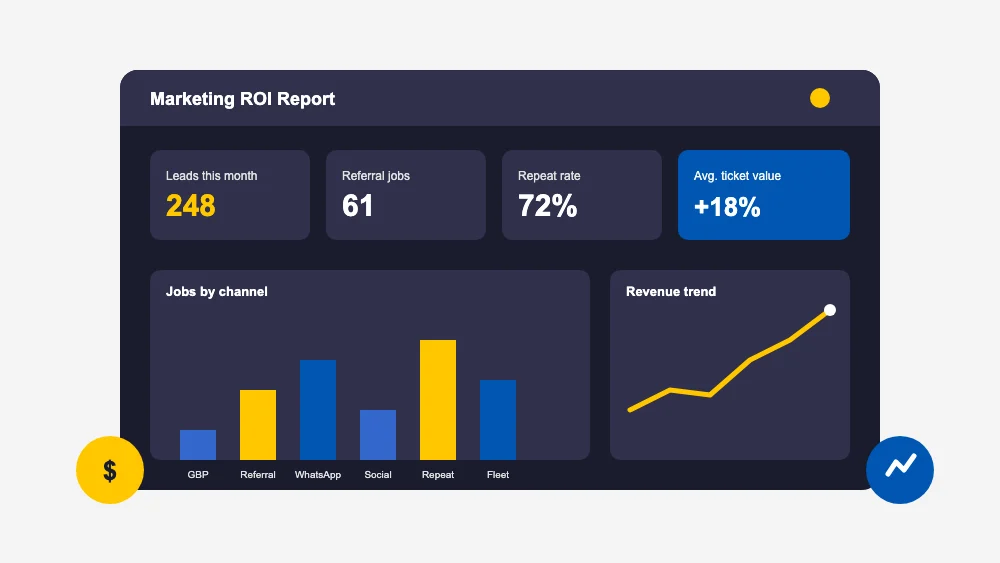
None of the tactics above are worth much if you can’t tell which ones are actually bringing in paying jobs. Tag every new customer with a source at intake — Google Business Profile, referral, WhatsApp campaign, walk-in, fleet account — and pull that data on a monthly basis so you can see cost and return per channel rather than marketing on instinct. BytePhase’s reports break jobs down by source, technician, and revenue, and for shops that keep their books in Tally, that same job and invoice data can sync through to your accounting so marketing spend and repair revenue live in one place instead of two disconnected systems. Review this monthly, not annually — a channel that looked good in January can quietly stop working by June, and the only way to catch that is to keep checking the numbers.
14. Put It on Autopilot With the Right Shop Software
Most of the ideas above depend on operational data you already generate every day — a job sheet, a parts list, a pickup time — being available to trigger the next marketing action automatically instead of manually. A proper repair ticket and job sheet system is the foundation: it’s where service history, parts used, and status live, and it’s what everything else (reminders, reviews, reports) reads from. If you’re still choosing that system, start with our breakdown of the best auto repair software. Layer on pickup and drop scheduling so logistics don’t become the bottleneck for fleet and multi-vehicle customers, barcode-tracked inventory so you never quote a job you can’t actually complete because a part is out of stock, and multi-branch visibility if you run more than one location. None of this replaces good marketing judgment, but it removes the manual busywork that keeps most small shops from executing consistently — the shops that win the local search results and the repeat-customer game are usually the ones whose back office isn’t held together with paper and memory — good software is what turns a list of auto repair shop marketing ideas into something that runs every week without extra effort.
15. Bring It All Together
No single tactic in this auto repair shop marketing guide will transform a shop’s growth on its own — the shops that pull ahead are the ones that run several of these at once and let the data tell them which to double down on. Start with the two that need no new software at all (claim your Google Business Profile, ask for reviews systematically), add automated reminders and a referral program once those are dialed in, then layer on seasonal campaigns, fleet outreach, and loyalty contracts as your customer base grows. If you’re evaluating software to run the operational side of this — ticketing, WhatsApp and SMS automation, AMC contracts, and marketing-source reporting in one place — see how it fits an auto and vehicle repair business on our auto repair shop software page, or check current plans at pricing.bytephase.com.